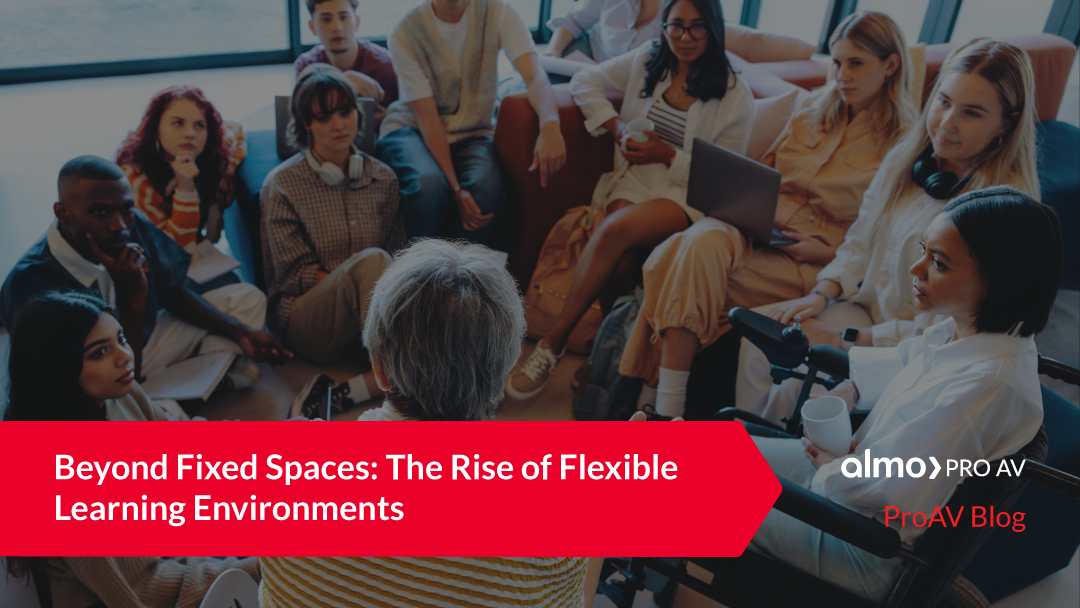
Is this a post-COVID impact or just a new way of teaching?
I was chatting with a few teachers recently, discussing their methods of interacting with their classroom. Then, I was sitting in training when this same topic came up again, and I decided to dig a little deeper to share some insight flexible classroom models and collaborative technology.
From classrooms and lecture halls to boardrooms and huddle spaces, versatility is everything.
 Project-Based Learning Environments
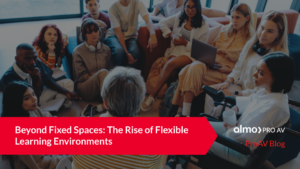
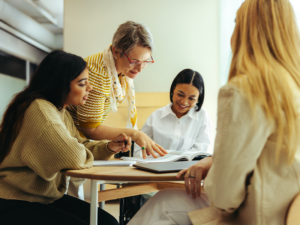
Many classrooms are straying from traditional rows of desks, and instead, adopting a project-based layout. Think about modular furniture, breakout zones, and studio-style classrooms that provide students with a flexible space that supports their learning preferences.
For many students, flexible classrooms can improve comfort and increase engagement. By providing diverse seating options and different classroom configurations, these modern updates can help facilitate effective group work and long-term projects.
The Blended Learning Model
In many classrooms, face-to-face instruction is often combined with digital or online components to create a blended learning model.
Understanding Universal Design for Learning (UDL)
Instead of finding one way to teach all students, Universal Design for Learning (UDL) strives to adjust teaching methods and remove any learning barriers to give everyone the opportunity to succeed. Let’s take a look at a few examples of UDL in the classroom.
Accessible Learning Options
Accessibility is an essential part of one’s success, and it’s important to ensure that each student has the resources they need to thrive in the classroom. From captioned videos to text-to-speech programs, these are key elements in creating an inclusive learning experience.
Spaces for Independent and Group Work
As I’ve mentioned, versatility in the classroom provides students with new ways to learn and collaborate. Whether rearranging desks, providing diverse seating options for group projects, or designating quiet spaces for independent work, UDL promotes a dynamic classroom environment.
Corporate Huddle Spaces
In an office environment, meeting rooms and huddle spaces require versatile seating configurations and future-forward AV technology to meet the needs of different team members. These spaces often accommodate both in-person and remote employees, so it’s essential to facilitate an equitable working environment for everyone involved.
 Making the Most of Multi-Use Spaces
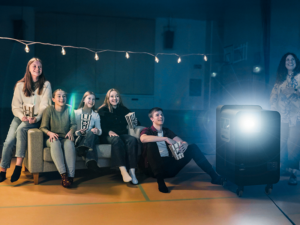
Common in both corporate and education applications, multi-use spaces maximize resources for lectures, workshops, meetings, and beyond.
AV Freedom in Motion
When it comes to AV in multi-use spaces, flexibility is the key. Combining instant setup and unmatched convenience, Panasonic’s Artome AV Cart is designed to accommodate any VMZ series projector.
By removing the need for permanent AV installations, the solution transforms nearly any environment into a future-forward presentation space. Simply roll it in, plug it in, and you’re good to go.
Learn more about the Panasonic Artome AV Cart.
I would recommend keeping flexibility in the forefront of your mind when designing a learning or training space for a client. This can require little creativity in the design phase; it can definitely lend its rewards to your client in the long term.
Just remember, Almo Pro AV has a solution for you in all areas of the audiovisual business!

Angie Greene | DSCE
Business Development Manager
Supported Manufacturers: Panasonic