In August of 1955, LIFE magazine ran an article in their Modern Living section called, “Throwaway Living: Disposable Items Cut Down Household Chores”.
The picture associated with the piece shows dozens and dozens of household items and claimed that the objects shown represented 40 hours to clean. Another picture in the article shows a single-use barbeque grill with stand, asbestos shell, wire grille and enough charcoal to last one hour. Maybe not everything convenient is a good idea.
 Eventually it was discovered that throwing everything away and filling up landfills was not a good long-term strategy – imagine that.
The first Ecology symbol that I recall came about in 1969, and in 1970 we had our first Earth Day. I’m also old enough to remember the early days of Mother Earth News and the Whole Earth Catalog.
Today we talk about fighting pollution and environmental destruction with recycling, reuse and reclamation.
A few weeks back, I was doing some web searching into audio consoles and I found a comment about how that one brand was so cheap that they budgeted for two, one to use and a second as a backup for when the first one failed. This was because of the brand’s notoriety for lack of quality, support and service.
Recently I had a request for eight wireless microphone channels. A popular online shopping site shows an eight-channel system at $34.99 per channel. That’s not a typo. $34.99 per channel. By comparison, Ronco’s Mr. Microphone was $12.88 back in 1978. $12.88 in 2025 dollars is $63.82. Today, Mr. Microphone would be almost twice as expensive per channel than the new online offering. At these price points, equipment has no real value and not even worth the attempt to repair if, actually when, it fails. We just throw it away and get another one.
Like Marty McFly, we’re all back to living like we’re in 1955 except in our Throwaway Society, we’re tossing electronics, appliances, tools and even cars away like they’re paper plates and plastic utensils.
Think about it – what can we buy today that will provide a lasting value for years to come? We used to call them Durable Goods and it’s a real economic category. The Durable Goods subcategory of Electronics includes TVs and computer equipment. The items in that category should probably be updated, as seeing a modern TV or a computer as a “durable good” is hard to fathom.
A true durable good was the old refrigerator that you had in your house in the ’60s and early ‘70s that came in Harvest Gold, Avocado or Burnt Orange that would live forever. You may still have one as your garage fridge.
In our world of AV, what product or signal transport can you spec in a project today that will still be relevant five years from now? Is any piece of modern AV equipment a durable good? Perhaps a good hardwired microphone or a quality loudspeaker, but that’s it.
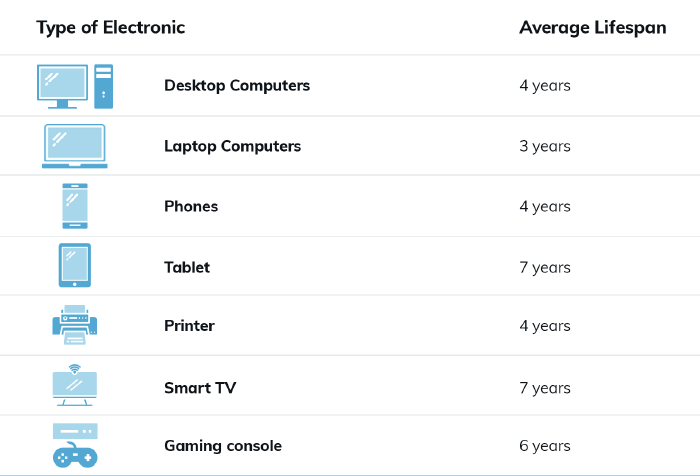 We’re often working with refresh cycles of five years, and I’ve seen articles where the IT refresh cycle is two to four years. People on average keep a phone 2 ½ to 3 ½ years and a car for eight.
Imagine if all of the things around your house had to be replaced every five years: lawn mowers, refrigerators, washing machines, lamps, bicycles, roofs, windows, electrical panels and wiring, plumbing, etc. It seems crazy, but we’re replacing AV equipment and the connecting infrastructure regularly to stay current with the technology.
Current with what? It’s not just the ever-increasing resolutions and the bandwidth required to support the higher resolutions. I would argue that it is in large part due to the plethora of proprietary signal interfaces and protocols that we have.
HDMI with HDCP was forced upon us from the Consumer world and HDBaseT made it possible for us to extend HDMI in our Pro world. Unfortunately, one manufacturer’s HDBaseT may not work with another manufacturer’s HDBaseT and it has always been that way.
So maybe we use a different signal type. Maybe we use SMPTE ST 2110 or one of the SDIs. Maybe we “simplify” and go AVoIP. With AVoIP we can choose from Dante, SDVoE, NDI, IPMX, SRT or one of the manufacturer’s proprietary AVoIP transport protocols.
Or worse, let’s see if we can just use HDMI or DisplayPort on the USB-C connection.
Do you see part of the problem yet? Although AVB/TSN (Audio Video Bridging/Time Sensitive Networking) promised to bring us signal transport’s version of World Peace, that was over 20 years ago. AVB/TSN had its challenges, so everyone continued to do their own thing. From an Alliance or manufacturer’s viewpoint, I get it – who doesn’t want to try and rule the transport world? But in the long-term, is this wise from a client and sustainability perspective? Moreover, how long do we think we can maintain all these separate protocols? We are working with built-in incompatibility and obsolescence. What if our IT compatriots say, “Enough of all this incompatible nonsense and proprietary transports” and decide for us what we’ll be using. It’s all on the network, right?
Broadcast and Production have been using NDI, ST 2110 and IPMX in their IP-based workflows and we’re already using conferencing cameras equipped with these protocols as we seek to emulate more of a production experience. As more of our regular conferencing and streaming looks more like a production, perhaps one of these will become our default but that still doesn’t solve the video protocol coming out of a computer.
In a perfect world, I’d like to see a single interoperable Ethernet AVoIP protocol built into every computer, AV signal source and AV signal destination. No more separate transmitters, receivers, encoders or decoders. Configuration so simple that even a cave man can do it.
 “So if AV is nothing but an endpoint, where does that leave us in the Pro AV world, Tom?” It leaves us where we should be: Experts on the communication environment. Realistically, this is where our true value resides – the crafting of the environment wherein humans can communicate effortlessly.
We spend so much time on signal extension and transport that we don’t have the time to work properly with the client on optimum image sizes, sightlines, content, lighting, interior design, furniture layouts, acoustics, microphone locations, loudspeaker coverages and intelligibility – all the necessary factors that contribute to a better overall communication implementation.
As I see it, the bottom line is that at some point, AV manufacturers will all need to learn to get along with one another for true interoperability – for our sakes as well as the end users and for the planet.
There is the SAVe organization that seeks to bring AV stakeholders together to take action to achieve the 2030 Sustainable Development Goals (SDGs). A big part of SAVe’s focus is to provide ways that companies can be more responsible in terms of reusing, repurposing, recycling and disposing of AV equipment. Get to know them at https://saveav.org/
In the meantime, reach out to us here at Almo Pro AV. We’ll do our best to help you craft solutions that will work best for your clients not only now, but as best we can, in the future.

Tom Kehr
CTS-D, CTS-I, Network+, LEED Green Associate, ISF-C, ATD Master Trainer
In-House System Designer and Trainer
Supported Applications: System Design
- How big does an image need to be?
- Where should the viewers be located in relation to that image?
- Will my sound reinforcement system be free from feedback?
Check out the Almo Pro AV Calculator Tools developed by Tom including:
- Basic Decision Making (BDM)
- Analytical Decision Making (ADM)
- Potential Accoustic Gain (PAG) – Needed Accoustic Gain (NAG)
- General Calculator & Converter
- Ceiling Loudspeaker Design