Using Social Media to Grow Your Brand
Way back in 1999, while working in consumer electronics retail, I caught the competition bug with my coworkers. It started out innocently enough – making sure I was always on time for my shift, stayed slightly later to help unload a truck, made sure my sales were always at the top, etc. I became addicted to wanting to be better, and part of that addiction was understanding that even at the age of 18, I was creating “my brand.” To me, my brand was wanting to be the most professional, helpful, accountable, and dependable employee they had. Throughout the past 24 years, my brand has not changed much. I still have a desire to be the best and put full effort into what I am doing. However, I have adapted to the times and find myself on social media more than most. Yes, I will admit that when used in a certain manner, social media can be toxic. It is the reason I worry more about my kids and what they are exposed to every day. As we get further into the social media realm, the term “influencer” can creep further and further into the negative spectrum where nobody will want to be called one. On the flipside of that argument, when used properly, I think social media is one of the single most useful tools that we as professionals can utilize. Let me explain why that is as I give you my Top 5 Best Practices for LinkedIn and social media as a whole.
Practice #1: Keep your information current and complete
One of the easiest ways in which I use LinkedIn is to view it as a resume. I want my most current information to be shared, including work history, profile picture, contact information, and references, such as recommendations and contributions from past work. Sure, this helps in the event you are looking for work, but I utilize this to attract prospective new connections who might have a need that I can help support. I have a firm belief that connecting with someone on LinkedIn is all about a mutual and beneficial partnership between the two. What can you do for me, and what can I do for you? It is because of this that I think it is necessary to not mislead. Having a current photo of yourself along with a current background tends to help guide the new partnership because both parties know who they are communicating with. I can promise you, having experienced an acquisition in the past year alone, it is because of LinkedIn that I was able to identify new team members and start building those new relationships!
Practice #2: Consistency is Key
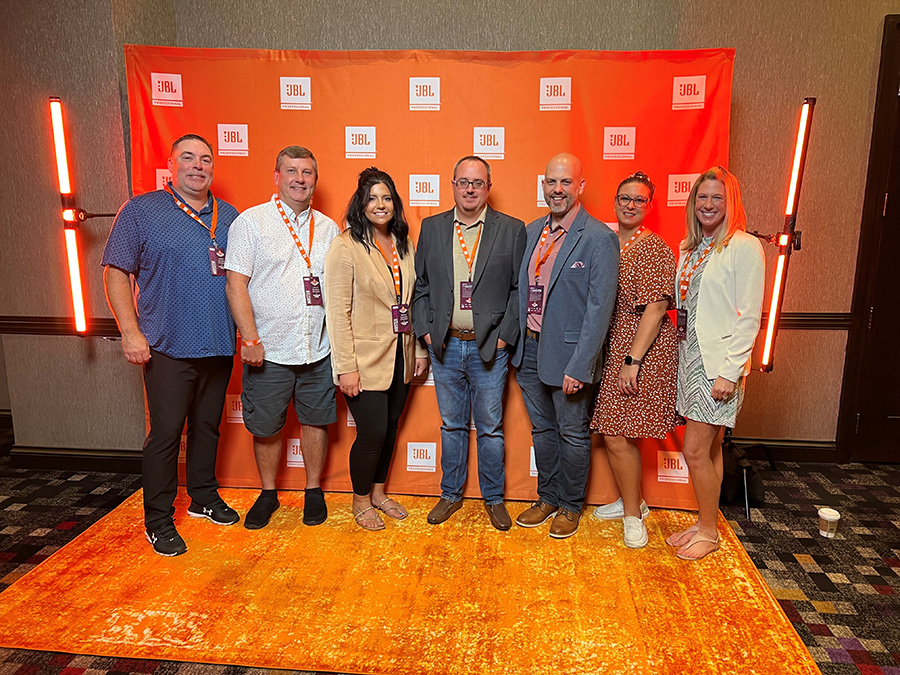
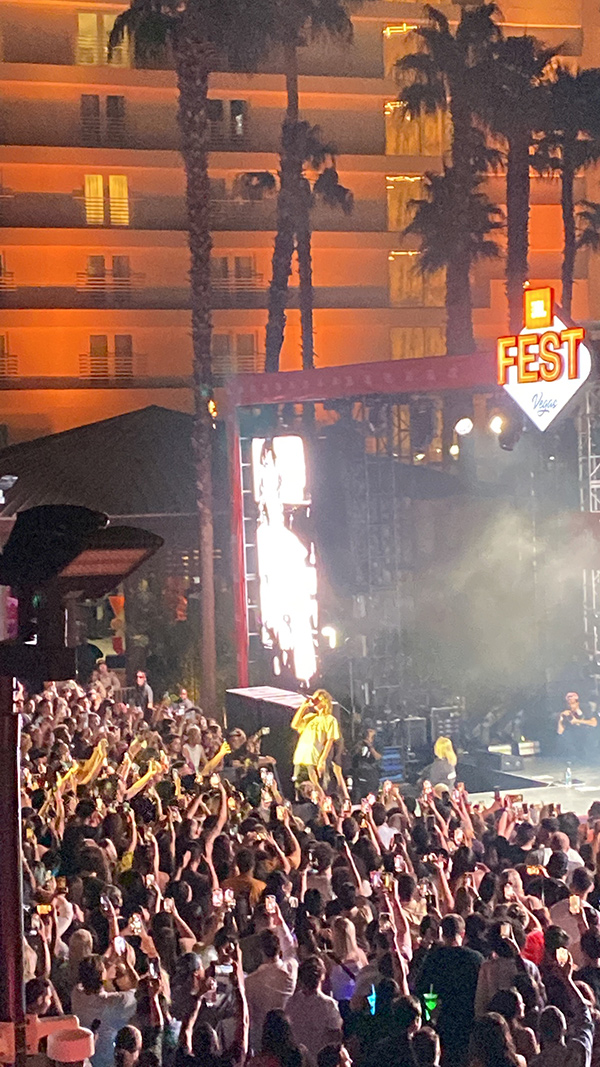
Social media of any form is very similar to how I teach my daughters how to do something. Back when we got a new basketball hoop for the front of our house, it was painful to see both of them struggle and get discouraged. In those moments, you channel your inner Kobe Bryant and you just keep doing it. Shot after shot after shot, even when it ricochets off the rim and you have to sprint down the street to get the ball! Social media is no different. If you post content once and then wait 6 months to post again, you are starting from scratch. You might as well not have posted that initial piece because I can promise you, your network has already forgotten. This was a particular lesson I have learned recently. While attending JBL Fest in September 2022, I was encouraged to chronicle my days and give my connections a close-up glance to what I was experiencing at the event. I then repeated the same practice a month later while attending the CI Total Tech Summit in Orlando. Even after having done this for two events, I did not realize the impact until I had multiple people mention to me, saying, “I loved following you along during those trips.” Consistency is key to building your brand, no matter what it might be. The more new content you post, the better – although, I suggest that you schedule it. Posting content 10 times a day, every day, might not be as beneficial as posting 1-2 times per week each week. It is all about what you are sharing and who you are trying to reach.
Practice #3: Have fun with it
Another quick story for you – it was mid-year 2020 and we all know what was happening. The phones were not ringing as much since there were many uncertainties in the world. I was left sitting at my desk one morning and I leaned back in my chair and thought, “What can I do today to pivot?” What I meant by this is, what can I do to change from the norm during these uncertainties to try to help my brand as a Business Development Manager. Looking around my home office, I saw different pieces of Pro AV equipment that I had collected over the years, and it dawned on me – “I’ll make a product video for LinkedIn.” I will be the first to tell you, the first take I did was atrocious. I was awkward, stumbling over my words and felt too scripted. By take #97, I was still not enjoying it at all and thought it was a mistake to even attempt this. It was at this moment that I thought of my daughter Samantha and how at a young age she wanted to be a YouTube star. She would record herself just for fun and say, “Hey everyone, its Samantha,” in a perky and friendly manner. So, to try something new, I ripped up the script I had and pressed record. “Hey everyone, it’s Rob Voorhees here, and happy Friday.” Being my genuine self and just letting loose was the ingredient I was missing. The audience knows when you are not being authentic, TRUST ME! If you are a non-technical person, like myself, do not post content that is overly technical and spouting off specs about a certain product. Talk to the audience as you would your family and friends and be genuine and have fun. It will reflect in the views you receive!
 Practice #4: Get out of your comfort zone
The Comfort Zone Model is something I preach daily. The old saying goes, “If it doesn’t scare you, you are not dreaming big enough.” I believe that wholeheartedly. I am not saying Social media is scary, but I am saying that I appreciate how it might be uncomfortable for many people. I never truly utilized LinkedIn specifically until 2017. I looked at my network of connections, which was in the low hundreds, and it dawned on me that I essentially had no network. I had nobody to turn to with business needs or support and especially as I got older, I wanted to know that I had this army of connections behind me. Think about these two scenarios:
- You are job searching. Would you rather send your CURRENT LinkedIn profile to 20,000 connections looking for a new job, or send it to 120, most of which are coworkers at your current job?
- Your company has a new product hitting the market. Would you rather send the product sizzle reel to 20,000 industry executives or 100 friends/family members who do not work in your line of business?
That is why I use LinkedIn the way I do. Videos, podcasts, blogs, etc. are all part of getting out of my comfort zone and reach more people. The further out of your comfort zone that you get, the easier and more fun this all becomes!
Practice #5: Remember your brand
Let us not forget what we are even discussing here. YOUR BRAND and how to build it. As a Business Development Manager for Exertis Almo, I view my brand as Exertis Almo and the professional AV product lines I am tasked with managing. Because of this, you will always recognize my shared content by the Exertis Almo polo shirt I am wearing or the topics I am discussing. Staying “on brand” is part of the practice that many people lose sight of. It is great that you are going outside your comfort zone and doing your first video podcast, but oops, you forgot to wear a company shirt or bring a demo product with you to show off. How will the audience remember who you are and what you were promoting? It may seem trivial and even a little vain, but how you look can be almost as important as what you are talking about. Your appearance speaks volumes for your brand in my opinion. Even if we look at Facebook as another type of social media. I am a member of my township’s Facebook group. We share events, emergencies etc. to the community. I cannot tell you how often we will have people trying to promote their new businesses on the page and their profile picture is something obscene. You are promoting your brand, to a new community, is THAT really how you want to get your name out there? Next time you go to share content, little tendencies like sitting up straight, ironing your clothes etc. is what could push you over the top to reach the audience you desire.
My goal with writing this was to encourage at least one new reader to jump into social media. Being an influencer does not mean you are sitting in a restaurant snapping 1,000 pictures of your dinner plate. 🥗 To me, it means you are providing thought-provoking content to help educate others. That is what this is all about: helping others! LinkedIn helps me every time I get a profile view, thumbs up on content I share, or new connection. All of those can lead to a new sale or new client for my brand and it is that excitement that keeps me coming back to its daily. In closing, I challenge each of you to find what social media platform works best for you and HAVE FUN!
Enjoy this blog?
Let Rob know over on LinkedIn …and/or connect with #ExertisAlmo on our LinkedIn company page.

Rob Voorhees | CTS, CTP, DSCE, CTNS, Dante
Business Development Manager
Supported Manufacturers: Business Communications Services, and Harman: AKG, AMX, BSS, Crown, DBX, JBL, Soundcraft, Martin Lighting
 As we happily fast-forward through 2020 and 2021, I would now place House of Worship amongst the top 3. The reason is quite simple — as the Hospitality and Bar/Restaurant markets clearly battled the ripple effects from the pandemic, it was Houses of Worship who I believe felt a similar impact that few were prepared for. Houses of Worship rely on the some of the same factors as those other verticals do, but the impact can be overlooked if you are not able to predict the future. To survive, these places of worship must keep their doors open for the community and be able to spread their message to the congregation. Shutter those doors due to a global pandemic, and the message risks getting lost.
 Streaming used to be a “cool to have” rather than a “have to have” need in this space. Most would probably associate streaming to the Mega Churches that we see on TV or in major cities. However, much like how the Pro AV industry and the push to use AVoIP, HoW have grown to accept that streaming simply cannot be overlooked. The question becomes, “Where do we even begin?” I say, start at bandwidth! There are two types of bandwidth in play here: the bandwidth that you are streaming at and the bandwidth that the stream is being watched at. Let us address these in two separate ways. Bandwidth is provided with two numbers – a download speed and an upload speed. When I refer to something as a 100×10 that means 100mb download and 10mb upload. When we are discussing streaming needs, we pay closer attention to the “UP” number specifically, because you are uploading the stream of the video and sharing this content to a larger audience. A general rule of thumb is that you have no less than a stable 5mb (megabits) upload speed to successfully stream. Given how most high speed cable internet providers start at 10mb upload speeds nowadays, this should not be too difficult to achieve. With that being said, any internet customer needs to understand that just because you are paying for a 100×10 cable package, does not mean you are receiving consistent 100×10 speeds. Those numbers are simply the “maximum advertised speeds” that the provider promotes, but when you factor in things like network traffic, time of day, and other extenuating circumstances (think about the number of people working from home and homeschooling in 2020 as an example), the speeds you receive in real time will almost normally be less. It is because of this that I never would recommend the bare minimum. For typical streaming needs, I would be comfortable recommending a 300×20 package or higher. This should ensure that you never run into issues when you can least afford to! Thinking back to the small, rural church I mentioned earlier, they were relying on a local DSL connection, which only had upload speeds of 1.5mb, hence their dire need to improve.
 The second type of bandwidth we need to be cognizant of is the bandwidth at which the video is being watched. Obviously, it is an impossible task to attempt to determine the bandwidths of everyone who is watching, so you might want to offer the stream in different forms: HD, 4K, etc. A good HD stream would fall under the 5mb recommendation I just made, whereas 4k would cause that to rise, but again, say 10-15mb most high speed cable options will suffice nowadays in regard to the content streaming. While talking about the content streaming, we cannot overlook other factors such as the overall number of devices on the customer’s network. Thinking about your own home as an easy example. You probably have cell phones, smart TVs, thermostats, alarm systems, tablets, PC’s and more all tied to your home network. If you now apply that same thought to HOW you may have some similarities such as cell phones, PC’s etc. but now you might also have streaming cameras, audio components, assistive listening devices and more to consider. It is because of this that many HOW will look to a Dedicated Internet Access (aka Fiber) because it is as the name implies. You are receiving a dedicated service for your building that is backed by an SLA (service level agreement) therefore; you are receiving the speeds you are paying for. It might be wiser to look at a 50×50 DIA service instead of that 300×20-cable service, based on what your needs are and what your network looks like. Sure there is an increase in cost with DIA, but the peace of mind you will receive each time you attempt to stream a service is worth it in most cases. Wouldn’t you agree?
 Samantha was officially diagnosed with Asperger’s Syndrome, which is on the “high functioning” end of the spectrum. She has been an Honor Roll Student for as long as I can remember, participates in clubs at school, and can recite every winner of Dancing with the Stars simply by you calling out a season! Samantha also has difficulties brushing her own hair, tying her own shoes, participating in athletics, being around loud noises, or being in unfamiliar social situations, such as meeting new people or making direct eye contact with anyone. Due to her motor skills and social needs, playing sports was always something she avoided, until she reached high school this year and became the Team Manager of the High School Volleyball Team! She found a way to GET IN THE GAME. One of the more common sayings you might hear is Samantha saying, “It’s too loud,” as she covers her ears, even as a high school freshman. Loud or sudden noises are “tortuous” to her, which I am still reminding myself of each time we watch the Eagles or Phillies and I let out a scream for a big play – IT’S TOO LOUD! Simply put though, in our house, we do not view any of this as a disability. Samantha has nothing but ABILITIES, and my job as her dad is to help her bring those abilities out so she is comfortable sharing with the world.
 For example, how many times when being asked to design the AV in an office space do you include a “quiet space?” No, I am not talking about a room with candles and beanbags (although that could be a consideration). I am talking about an office that is a dedicated quiet room, with little to no distractions,