Let’s talk sound.
We’re in this huge (to us) world of AV and the V often grabs all the attention because it’s bright and colorful and it gets bigger and with more pixels all the time. It’s the Blinky Light Syndrome. Audio is seen as the noise that goes with the picture and sadly, really good audio implementations aren’t very common. Further, the common user of AV doesn’t understand even the basics of audio such as the Inverse Square Law but they can understand the simplicity that 4K is more than 2K so it must be better.
 A survey that I saw about workplaces taken pre-pandemic showed that audio was four times more important than video and that 4 of the top 5 frustrations were related to audio. None of the top five were video related yet the majority of the investments were expected to be focused on displays and control systems. The blinky lights. Little “a”, big “V”.
To some extent, it’s easy to understand the focus. It’s easy to justify a new 21:9 display or LED wall because the upgrade is in your face, literally. You know where the money went. It’s right there on the wall.
While you can experience sound, good or bad, you can’t see it. While you can easily measure background noise or RT60 times, you can’t see a NR rating or a RT60 time and most site surveys never include making basic room acoustical measurements. Out of sight, out of mind.
While some know the room has a sound problem, they may not understand the benefit of why they should put money and resources into changes needed to the infrastructure. It’s easier to justify a budget for equipment because it’s invested into something tangible. They can show their supervisors exactly where the money went. They can point to it.
Recommendations for acoustical treatments or reducing the HVAC noise aren’t popular even though they are foundational for human communication within the space. Acoustical treatment is often the first thing deleted in a “value engineering” exercise. (Perhaps we should market acoustical treatment with sensors and colored LEDs that vary with the amount of sound energy being absorbed or diffused so they can see it “work”.) Worse, acoustics may not even be a consideration when aesthetics are the primary concern. Remember this after the last contractor has packed up and left the site: The end users are still there. They’re stuck with whatever has been built whether it serves their purposes or not. If it’s a bad room, the search begins again in a couple of years to upgrade the technology in the room because communication in the room requires effort. While that’s fine for selling equipment, it impacts AV’s reputation as an industry.
Here’s something else to consider:
 The one thing that hasn’t changed over time is the human. Humans communicate with other humans using the same interfaces, the same eyes and ears they’ve been using since we were drawing pictures on cave walls.
And while the signal processors have improved, they still can’t fix a bad room.
Numerous references state that the RT60 time for a meeting room or classroom should be under 0.60 seconds in the 500, 1,000 and 2,000 Hz octave bands. Persistent reverberation decreases intelligibility.
ASHRAE’s (American Society of Heating, Refrigeration and Air-Conditioning Engineers) chapter on Sound and Vibration gives maximum allowable background noise levels of NC 30 and RC 30. Excessive background noise levels reduces the acoustic signal-to-noise ratio in the room which decreases intelligibility.
If communication is impeded in the room, the humans have to exert more energy to listen and listener fatigue begins to set it. This isn’t “Zoom Fatigue”. This is the fatigue that sets in trying to communicate with one another in the same room. The extreme to this is being on the far side of an audio conference call with bad audio. It’s too much work to try and understand what’s being said so you start checking email and doing other things. You might as well not even be there as information is no longer being communicated once you’ve tuned out. If you’re in the same room with bad acoustics or excessive noise you just pretend to be listening because doing otherwise is simply impolite. Add in someone whose first language is not your own and the effort required to understand what’s being said increases exponentially.
When was the last time you saw any sound measurement requirements on a Site Survey form? Why is it that two of the most basic metrics used to assess a classroom or meeting room for suitability as a classroom or meeting room are ignored like they don’t exist?
A lot of rooms with only carpet and acoustic ceiling tiles for the drop ceiling will meet the RT60 criteria. For example, a 30 ft. x 20 ft. with a 9 ft. ceiling comes in just under 0.60 even with some glass walls. Raise that ceiling to 10 ft. and you’ve added more reflective surface but the amount of absorptive surface, the ceiling, hasn’t changed and you’re over the limits. Lose those absorptive ceilings tiles with the 9 ft. ceiling and the numbers go to about 2-3 seconds. But I’m sure it’s a pretty room.
 I’ve seen meeting rooms with tall open ceilings including exposed joists and ductwork – all the properties of a mini gymnasium. Another one was an open office concept in an old warehouse made of concrete with a conferencing set up in the middle of the open area. It had all the acoustical properties of a parking garage. I’ve been asked for a mix-minus system in a room that’s less than 1,100 sq. ft. because the acoustics are so bad. It had a very tall “V” shaped ceiling that rises on both ends and comes down to a point about 12 ft. AFF in the center of the room. But it has a skylight.
And while things like ceiling or wall mounted microphones have gotten better and the sound has improved going to the far side, these same devices and processors can’t fix these rooms.
What about noting other acoustical room defects such as concave walls and domed ceilings?
Have you asked AI to show you a modern meeting room? If you’re an audio or acoustics person, you’ll cringe at most of these images but that’s what clients are seeing and now expecting from the look of a meeting room. AI needs to take some courses in acoustics.
If you’re trying to meet sustainability objectives for LEED or the WELL Building Standard, you’ll see some of the same acoustic criteria I noted above for limits on RT60 times and maximum background noise. These folks get it – it’s about the quality of the environment being designed for human comfort.
Someone asked me recently what I use on site. “My eyes.” If the room looks pretty, you’re probably in trouble. All of that glass and marble is not your friend acoustically, nor it is the user’s friend. That’s not to say that I don’t back up what I’m seeing without measurements because I do measure, but if you’ve been around a while, you know what to expect before you ever open your kit.
That’s also not to say that every meeting room or classroom should be devoid of any personality or artistry but it needs to consider room materials, room shape and room size as primary considerations for the room it be effective as intended.
Designing for Good Sound
In the end, we all know we need to sell, design, specify, install, configure, test, commission, and support AV systems to make a living. However, I think we’re well overdue in informing building owners, architects and other construction disciplines in the criteria required for a functional meeting or classroom space.
First, make it comfortable for the humans to communicate with each other in the room. They probably won’t understand or know why they like the room but they will and they’ll prefer it over other underperforming rooms. Afterwards, apply the technology so they can communicate with other humans outside of that room.
If you need assistance or have questions about a client’s project you’re looking at, reach out to us here at Exertis Almo. We’re happy to share what we’ve learned over the years to help make it a complete system that includes the room.

 I have often joked that AV doesn’t run on electricity – it runs on food and coffee (or energy drinks for the installers). Truthfully, it runs on relationships. Some new but most old. Something came up and they took care of you. What was supposed to happen, happened or they helped ease a difficult situation. It was something that went beyond the swag – it was that personal touch. A quick call or email after hours. Listening. Solving the problem and making it right.
 AV is a relationship business whether it be with manufacturers, distributors, rep firms or clients. The equipment itself is often secondary.
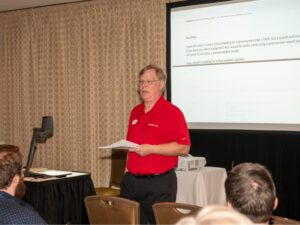 InfoComm is right around the corner and there will be plenty of talk about products. Sure, take time to talk about the products but more importantly, spend some face-to-face time with the people behind those products. The gear is fun but it’s the relationships that matter.
 Here is a list of things that I don’t want to see or hear including my nicknames for each:
 Want to know something? Ask someone who has been around a while. An example of this was back in 2007 as I got off the train in Guilford in Surrey, England. I needed directions to my hotel and since the information center was closed, I made inquiry with the nearest group of locals. They were younger and had never heard of the place. Their knowledge was limited. Afterwards I sought assistance from a much older person that I saw. Instant useable information. He knew his small town and how to get around.
 In this case, what I discovered was a person with much the same in product preferences and a similar approach in design philosophy. It was very beneficial, when either of us got a project, to get on a Zoom call to discuss, assess and quickly arrive at an effective design approach. Yes, the client may have been inquiring about a product or solution they’d seen but we could also look beyond at what problem they might be trying to address with that equipment or inquiry. It helped us to better get to a real solution rather than just coming up with a list of boxes that could be sold. There’s a lot of value in that and it comes only with experience.
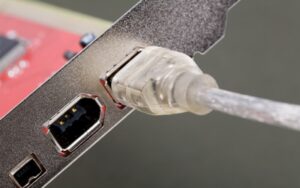 Truthfully, you need the best of both youth and maturity if you’re not going to be left with a warehouse of FireWire interfaces or trying to sell solutions that promise to change everything but in practice, have limited application.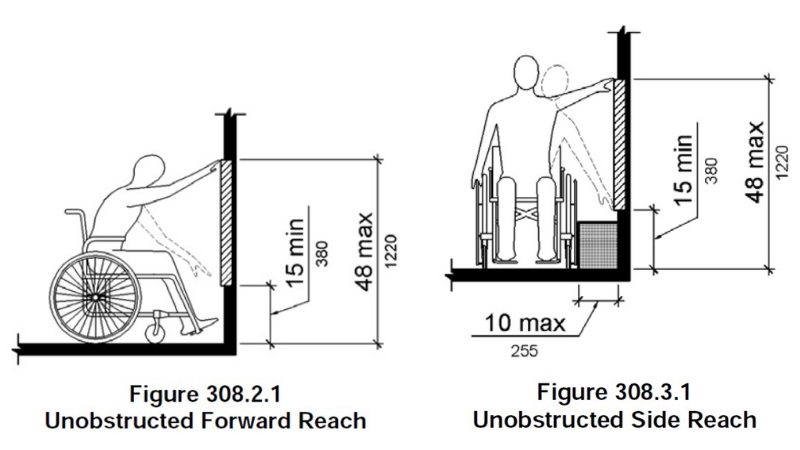
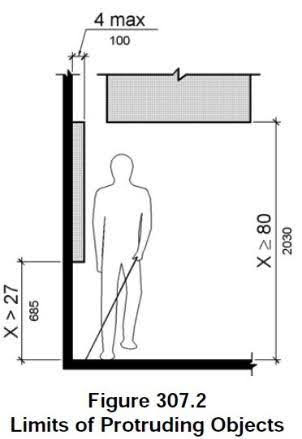 307.2 Protrusion Limits.