Mo’ Money, Mo’ Problems? Why Spending More on AV Can Be a Wise Investment
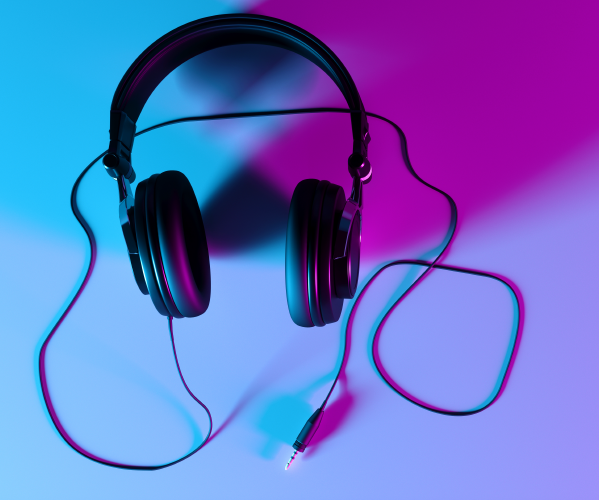
I remember it like it was yesterday. I was standing in the audio dept of a particular big box retailer where I worked. A middle-aged man approached our wall of receivers, pointed to a particular name brand that was on the higher end of the pricing scale and asked me “how is this one?” I had my reply all mapped out in my head to try and make the sale and I stated “for starters, it is one of the best you could buy….”. Thinking back to that response, I now ask myself “why was it one of the best”? Why was I taught to say that and how did I know that this was best for that particular customer? It all came back to price. In retail particularly, new employees tend to be trained that the more expensive something is, the better it actually is. I was no different in that I was trained that way and for the first 25-50% of my career I truly felt that way. Rather than learn about features and what differentiates one speaker or receiver from the other, I based a lot of my decisions off price and price alone. I am here to tell you now, BIG MISTAKE! However, this begs the question “when is it appropriate to spend more and when is it not”? As a self-described “lover of headphones” I have bought and tried more headphones in 1 year than most people would in their lifetimes COMBINED! I am always looking for new features like spacial audio, improved battery life, advanced IP ratings, and of course noise cancellation. Through these purchases and tests, I have found “budget brands” that compete extremely well with the $300-$500 headphones but with one big caveat- How am I using the headphones and what features do I really need? For example- why would I need to spend more on advanced noise cancellation when I planned to only use the earbuds running on the street where I absolutely need to hear traffic and my surroundings? On the flip side, I absolutely will pay a hefty price for noise cancellation on my on-ear headphones because those are my saving grace during cross country flights. The answer lies squarely in the details and when it involves any given AV project/design, the same principles can be discussed. Let us dig deeper into those!
 It is commonplace for me to receive an email that asks what I recommend for a specific product. The first line of my reply will generally be to tell me more about the project, how the needed product will be used, the dimensions of the room it’s being used in, and more. This is no different than what I described above in my headphone quest. How I use the headphones is parallel to how will the product/system be used. I will also always ask about the desired budget because I like to know what expectations the customer has and for the sake of this writing, I want to spend the bulk of our time discussing that topic deeper. While working at that same big box retailer back in the 90’s I remember ringing up a sale that I had just closed and the customer in this instance was an older woman who needed a new TV along with some external speakers. Nothing fancy, but good enough that she wouldn’t have a hard time hearing her shows. After handing her the receipt she replied, “you would make a lousy car salesman”. After laughing and feeling partly insulted, she explained “you were so honest and sold me what I needed rather than try to overcharge me for unnecessary bells and whistles”. That same principle applies to how we should approach AV now. As I sit here at my desk, I have 3 different microphones that I have acquired over time. They are not all created equally, but they all could serve a purpose for the right “customer”. Using microphones as our primary example, there are many types – Dynamic, Condenser, USB, Tube, Headset, Boundary, Wireless, and more. Let us also not forget that handy mic that is already built into our laptops. How does someone decide what is suitable, how much to spend, etc.? The proof is in the project/needs analysis I discussed earlier.
Let me take you through 5 Steps of “Rob, I need a microphone. Which would you suggest?”
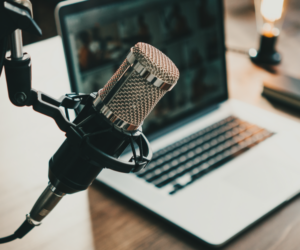 Step 1: Finding out how the microphone will be used. The customer wants to start a podcast series from home and hopes to eventually expand to an offsite studio. Through questioning, I also found out the customer has 2 young kids at home.
Step 2: Through the customer’s answers, my mind shifts to condenser as well as USB microphones. Condenser mics are great when it comes to picking up details in the voice and delivering the “professional” sound that you might find on other podcasts or recorded content. I am also thinking USB for simplicity, but the correct choice for the customer lies in their intentions. If podcasting is just a hobby or something they are tinkering with, it could be wiser to start off with a simple plug-n-play USB mic to learn on the fly, before spending more on a condenser mic with the added accessories that are needed such as a boom arm, usb interface, etc.
Step 3: After learning more about the customer’s intentions of making podcasting a career, we collectively decide that Condenser is the way to go. They love the added feature of having switchable polar patterns because of those 2 young children running in the background and they are worried that the mic could pick up that noise. Mic polar patterns will determine the space/area that a mic will focus on in regard to picking up sound. Omnidirectional picks up everything around the mic (not proper if you have small children or pets nearby while recording) while Cardioid is ideal for podcasters because it picks up only the front of the microphone where the host is speaking into. In terms of pricing, a decent condenser mic could retail for $200 as a starting point but increase up to $1000+ depending again on features, details in sensitivity and durability amongst others. In comparison with a USB mic, which typically sells for $99-$200 and nothing else is needed to set up.
Step 4: We now know Condenser is the way to go, but don’t forget to complete the puzzle for the customer! You need the essential items to make it all work! For purposes of podcasting, you would look at a boom arm/stand to mount the mic, an XLR cable, a shock mount for the mic, a pop filter, some type of usb interface/usb mixer, and then expand into cameras, speakers etc. Those essentials could also vary in cost depending on the functionality and quality but could add an additional $300-$500 to the mix to start. Budget applies to these essentials as well and that is proven by what I call the “Boom Arm Debacle”. Microphones come in varying shapes, sizes, and weights. When purchasing a boom arm or table stand the weight needs to be known. The first boom arm I ever bought, which can be considered on the cheaper end of the spectrum, refused to stay in its proper positioning because it couldn’t support the weight of my mic. Having gone and spent a little bit more ($200) on a better rated boom arm, I no longer have that issue. Thus, it is not always better to cut costs!
 Step 5: Time to wrap it up with a bow! Because you asked the right questions in the beginning and identified the desired system use, external factors such as children, and variables such as the customer wanting to make this a full time career you were able to recommend the proper mic, proper essentials to add on, but didn’t overcharge the customer so they have a confident feeling that they weren’t just “taken for a ride”. It also gives the customer room to grow. Let’s assume a year from now they are now a successful/viral podcaster with millions of followers and multi-million-dollar endorsements, the need might be there to upgrade to that $1300 condenser mic that triples the amount of selectable polar patterns or has a built-in overload warning to detect problems before they happen. However, you determined that would probably be overkill in the early going as they feel their way through things and gain a comfort level.
These same concepts and examples I shared can also be applied to speakers, amplifiers, video walls, cabling, and so much more. Do you need the $5 HDMI cable or the $100? The only way of answering that truthfully is by examining the project details and determining where to spend the project budget and where not to. However, it is safe to say that Mo’ Money DOES NOT always mean Mo’ Problems. Challenge yourselves to identify those system needs in your current and future projects, and not only might you find that budget issues become a thing of the past, but customers will respect the thought process you put into it and helping choose what really will work for them.
Enjoy this blog?
Let Rob know over on LinkedIn …and/or connect with #ExertisAlmo on our LinkedIn company page.

Rob Voorhees | CTS, CTP, DSCE, CTNS, Dante
BDM II – Technical Specialist
Supported Manufacturers: Business Communications Services, and Harman: AKG, AMX, BSS, Crown, DBX, JBL, Soundcraft, Martin Lighting
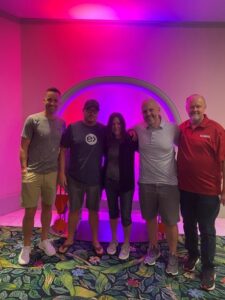 Being that I am now 42 years old and have worked in Telecom and AV for the better part of 2 decades, I have 12+ trips to Las Vegas completed and feel like I know what to expect each time I fly into Harry Reid International Airport. First, it was the annual DIRECTV Revolution Conference, then it was Channel Partners, followed by InfoComm in alternating years. As I have explained to my wife (who has never been), I feel like the mystique of Las Vegas wears off after the first or second trip out there. However, when I was approached back in 2019 with the chance to attend my first ever JBL Fest, I felt the type of excitement as if I had never been there and was eager to experience a new list of firsts. Unfortunately, a family health scare cancelled my trip that year and 2 years-worth of a Pandemic further delayed my first JBL Fest until 2022. Having enjoyed last year as much as I did, I still felt a certain sense of the “exciting unknown” when I was invited to attend again this year. Along with our Exertis Almo Incentive Winners – Josh Taylor, Kyle Smith, Randy Robinovitch, and Ray Farler, I headed out to Las Vegas and made sure to document JBL Fest 2023 for all of you!
 Landing Las Vegas, you are almost immediately greeted by hosts holding “JBL Fest” signage at the baggage claim area and are ushered to a waiting shuttle (aka a rather swanky party bus) which took us to the Park MGM where we would be staying for the next 2 days. Surprise #1 on this trip was while I was checking in and I lift my head to notice Kevin Humphrey, Harman Distribution Manager (and close friend), standing next to me. I have always said that I am only as successful as those around me, so to be able to share this experience with someone deserving like Kevin made the event that much more rewarding. We then walked to the Hospitality Suite where I received a welcome packet and the “infamous” JBL Fest Swag Bag. This year, the bag contained several JBL branded items such as water bottles and hand sanitizer, but the highlight was the customized pair of JBL Tour Pro 2 earbuds. If you are not familiar with these, they are JBL’s newest noise cancelling earbuds which were featured in WIRED’s Best of CES 2023. Spatial Audio, wireless charging, and a first of its kind touch display on the charging case make these anything but your typical earbuds. I had to open and pair them with my phone the second I got to my room! Once we got to the complimentary lunch, I was able to meet with our team as well as with Frank Joseph and Whitney Bosch from the Harman marketing team as we game-planned the day and discussed all that was happening.
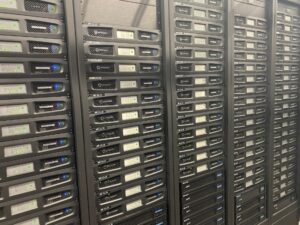 Next stop was a VIP-access tour of Allegiant Stadium which is where the Las Vegas Raiders play their home games. Seeing as how I just recently took my daughter on a tour of Citizens Bank Park as well as Lincoln Financial Field, this was right up my alley! Aside from going down to the field level and experiencing this newer facility up close, we received some behind the scenes sneak peaks into the A/V which included their control/IT room which housed an impressive 50+ Crown DCI4x1250N amplifiers and multiple BSS Processors amongst other items. Simply standing next to the rack of amps was eye-opening as you realize how much it takes to truly power that type of operation. While we didn’t get up close to the speakers, we did learn it was the JBL VLA Series of Line Array Speakers which are typically found in stadium-type applications. Following the tour we had a little downtime before meeting up for the evening welcoming reception at the Hotel, which we were greeted by a team photo opportunity and another swag bag complete with a custom JBL Fest Masterclass Bluetooth speaker. This opening event was followed by an even bigger party at the onsite club. Mingling with a diverse group of worldwide influencers and Harman executives is always fun but I was fortunate enough to make my way to the Harman VIP lounge which then led to a once in a lifetime opportunity! Kyle Smith and I were invited into a back room where we met and had a photo opportunity with Lenny Kravitz! To finish things off was a rather surprise appearance from Grammy winning artist Bruno Mars who sang along with some of his biggest hits. Not a bad way to spend a Thursday night!
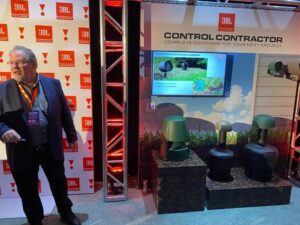 Waking up on Friday I knew we were in for a long but rewarding day. First off was breakfast which came complete with a Johnny Fly Sunglasses gifting station! You essentially walk up and try on several pairs of high-end sunglasses and then say “ok ill take these”. The wrap them up in a custom JBL case and you are on your way! We then made our way to the Installed Audio Masterclass presented by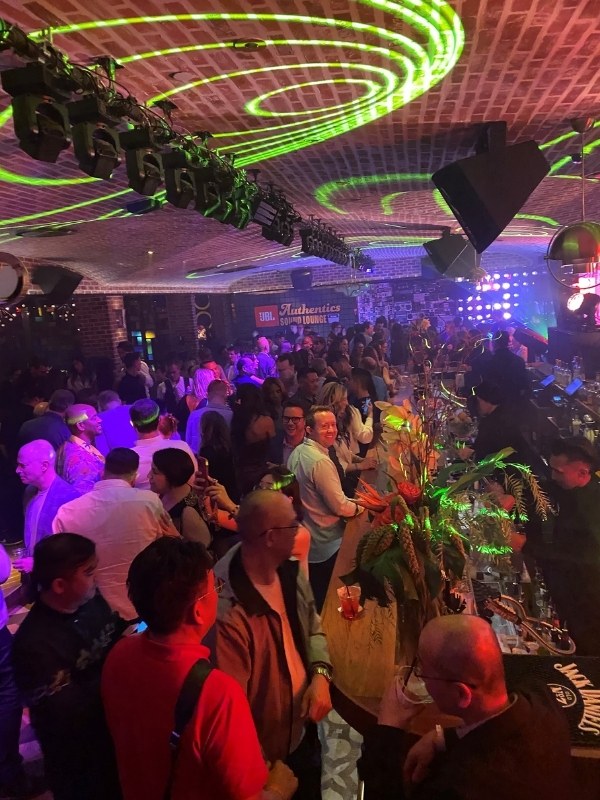

 We immediately went to the JBL Stage with VIP access where we all met up for drinks, food, and music. I ventured off while Bebe Rexha was performing and found myself with perfect view of the main stage where an EDM DJ was getting the crowd fired up for the next act. After looking through the street vendors and other areas, I called it a night as I listened to Bebe Rexha perform with special guest Tyler Hubbard (from Florida Georgia Line). The Killers were the headliner of Friday night and through videos I saw from Josh Taylor, it seemed our entire team left the trip on a high note!
 The How’s: How Do you Continue Your Learning?
 Literally EVERYWHERE! The places to look for educational opportunities will all depend on the topic or goals you set forth. For example, when looking for a certification involved in Telecom, I would head to Google and type “most popular certifications in telecom”. It is here that I uncovered the CTNS, found reviews from past students, and also uncovered similar courses that I could use to expand on the CTNS itself. Outside of search engines, I find that some of the most valuable courses are within our industry. For example, everyone might be most familiar with CTS, CTS-I, and CTS-D offered by
 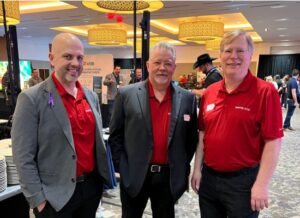 Lastly, I think with any line of work, you run the risk of it getting stale. Doing the same thing every day and never trying to change things up. I like to always be learning because quite frankly, it excites me to have an extra tool in the tool belt. Finding new ways to differentiate myself and my employer while also increasing the product knowledge for which I can confidently speak in future calls and meetings. Confidence is king after all!
 by outdoor signage educating you on local events, exterior Wash lighting that illuminates the hotels brand and pleasant background music from the
  While waiting in the lobby for the rest of the team I noticed a display that was showing local flight schedules for the nearby airport, news updates, and local sports scores. If memory serves me correct, this was my first experience with hotel digital signage, and it clearly left enough of an impression on me that I still remember it a decade later. That display caused me to stay in the lobby longer and kept me informed in the moment. It provided the “home” experience similar to waking up and watching the news or checking my internet and that is what the guests want. Outside of the signage, you surely will find audio or video near the bar/restaurant area. Perhaps you see the typical pendant speaker or low-profile ceiling speaker for announcements and background music as well. All very common regardless of the property you chose. Out of guest view could be the service closest where you find the A/V rack with multiple amplifiers and DSP’s along with networked A/V hardware such as encoders, decoders and switches. Normally kept out of view, but oh so important to the functionality of that given property.
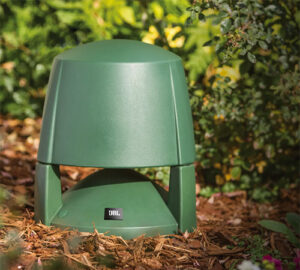
 Category 1: The Hybrid Indoor/Outdoor Speaker. A good example of this would be the
  Category 2: All Weather. A good example of this would be the
 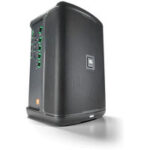 Category 3: Powered and Portable. This category houses some of JBL’s best selling speakers such as the
 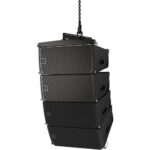 Whether it is the ever-popular VTX A Series or the newer
 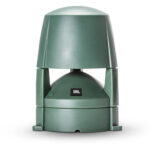 This series comes with an ip-56 rating, so you know you will be getting long-term use of these. JBL has recently expanded this category to include in-ground subwoofers and the new
 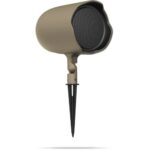 in their ground stakes so more customers could utilize. Another point of emphasis was how they always strive to be ahead of the trends/needs of their customers. I referenced the recent surge we saw in outdoor audio needs from 2020 to now, and Tewks reminded me that it takes 4, 5, or even 6 years to fully develop a new product so with that in mind it was clear that Harman placed an emphasis on this category well before the need even was present.