Want a New Year’s Resolution? Put the “Professional” in Pro AV
You do all these things because you’re supposed to be a responsible adult but so many of you still look and sound terrible in every video call. I can’t tell how many times I’ve witnessed an executive level person of an AV related company or organization sound and look terrible during an industry interview or podcast. It’s so bad that it’s unusual when they do it well.
I would argue that you are tarnishing your value as a supplier, client and coworker if you don’t get the basics of sound and video correct on a personal level.
 Here is a list of things that I don’t want to see or hear including my nicknames for each:
- Only one half of your face because the rest is out of frame. (Abstract Art)
- Only one side of your face because you’re not looking at the camera. (The Profile)
- A dark face because you’re poorly lit. (Witness Protection Mode)
- Way too much space above the top of your head. (Kilroy Was Here)
- Your chin. (The Uppercut)
- An empty conference table with you at the far end. (The Bowling Alley)
- Your laptop microphone. (Speakerphone Mode)
- Your videobar 25 feet away from you. (1/24 Scale)
Face it. Literally. Your laptop camera and microphone look and sound terrible. Your lighting is non-existent. Why are you using the built-in $2.00 microphone and $10.00 webcam to try and sell someone on the need to invest $100K in their conference room?
Promote the value in a quality audiovisual investment starting at your desk – convey your professionalism one-on-one.
I know this can be a vanity issue for some of us. We don’t think we look good on camera, so we turn the camera on only because it’s expected. Speaking as a lifetime member of the Introvert Club, I get it. But as a fellow coworker and introvert said to me, “Preparedness is the best medicine for nerves, so it all began with a simple thought, ‘If I upgrade my webcam, maybe I’ll feel more confident on camera.’” For him it started with a camera that’s popular with content creators. That lead to research on lighting and then what elements were in view of the camera frame. After that came the audio. He now has the best looking and sounding rig in the entire company. Plus, he and his wife started doing podcasts! He’s not even in the Pro AV division, he’s in IT. I might have the edge on him on the audio side, but he absolutely smokes me on the video side.
Lesson: If your IT person looks and sounds better than you, you seriously need to up your game.
Remind yourself that we are in Professional AV and more importantly, that we are in a relationship business. You wouldn’t visit your client in person knowing that you had bad breath so why are you practicing virtual bad breath with every video call?
Camera, lights, microphone and look up the “Rule of Thirds” for subject framing. It’s a “system” not unlike all the various components we put together for a client’s “system”. While it may be on a smaller scale it should be no less professional than the experience we’re promoting.
While we would love to work with you on your next $100K project, we’re no less interested in helping you look more professional on a personal level. This is the AV industry – we’re all in this together.
If you enjoyed this blog, check out Tom’s “Choose Quality AV” blog for more insights.

Tom Kehr
CTS-D, CTS-I, Network+, LEED Green Associate, ISF-C, ATD Master Trainer
In-House System Designer and Trainer
Supported Applications: System Design
 Fast forward, I joined the world of Pro AV distribution. My role as a Category Manager for
 While I had read AVIXA’s and Pearson’s (the testing center) details on what to expect, I was a bit verklempt when I first arrived at the testing facility. You may not wear a jacket inside nor a cap nor jewelry. In fact, I had to leave my wedding ring in a locker, along with my keys, phone etc. No hair ties or clips. Empty your pockets. Expect to roll up your sleeves and do your own pat down. Don’t get frazzled. This is standard practice. Do not take a calculator. One will be provided for you along with a dry erase marker and sheet. You need two forms of identification. ie, passport and driver’s license.
 BDMs strengthen relationships with manufacturer partners on various levels. We provide regular reports and valuable information to manufacturers, ensuring they are well-informed about market trends, sales performance, and customer feedback. This collaboration helps in:
 As BDMs, we bring immense value to resellers by serving as a bridge between manufacturers and Exertis Almo. This partnership helps resellers by:
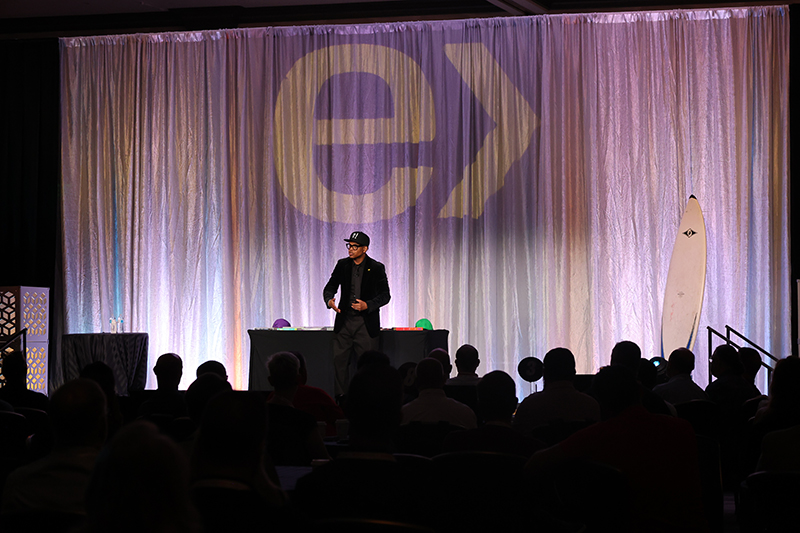 “Work, Life, Presence” a saying that will always be close to my heart and a reminder to myself every day. I was sitting at the
  1. Creating a Flexible Schedule


 As I write this article, my truck is in the shop having new tires put on. Buying tires is one of my least favorite purchases of all time!!! Yet every few years I go through the same process. Gather my tire size information, check some tire websites, identify my needs in terms of performance (I live in Buffalo, NY, so a tire that performs well in the snow is a must!!!), establish my budget, read some reviews, select my top picks, shop prices, book the appointment.
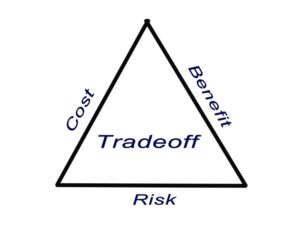
 Balancing these tradeoffs requires careful planning and consideration of the project’s specific needs and constraints. Conducting a feasibility study and involving all stakeholders in the planning process can help identify the best approach
 Of course, this naïve and incorrect view was the result of being on only one side of the fence. In the following years, I have been lucky enough to serve in several different roles throughout the industry, from design engineer at a major university, to project engineer, to consultant. Each of these roles has presented different sets of challenges, but more importantly, they have allowed me to see the industry from both sides of the fence, and how each of these roles complement each other to produce satisfactory results for clients and end users.
 Why then do we need to have design drawings at all? Why can’t the Project Engineer simply take the end user’s goals and design the system to construction level all by themselves without the need for a Design Engineer?
 AV integrators, by their nature, must have relationships with the manufacturers of products that they sell and install. To ensure competitive pricing, on-time delivery, and pre- and post-sale support, integrators must cultivate and maintain these manufacturer relationships. Through no fault of their own, this means that integrators will tend to want to sell products provided by manufacturers with which they have good relationships.