The AV MBA | Put Your Keys on the Dash!!!
Data Analytics
I seriously considered pursuing culinary as a profession in my early twenties. Instead, I ended up going to school for business and working in AV. You see the connection, right? Anyways, one of the terms that you’ll hear used with frequency in a professional kitchen is “mise en place.” This is roughly translated to, “everything in place.” In practice, it means that all the ingredients and tools needed for that day’s service are prepared and organized in advance. The last thing the cooks need to be doing in the middle of firing orders is running around looking for ingredients and prepping them.
I’m an avid user of a certain fitness app that tracks my daily steps, exercise, meals, calories, weight, etc. It allows me to set goals, track my progress and evaluate my results. Even more, it uses my data to adjust my targets to optimize my health and fitness. It’s intelligent!!! This is all done through my phone on an app and I can access it anywhere, anytime, in an easily digestible format. It has helped me immensely in improving my fitness level and it keeps me motivated and focused on my goals because using it has become a habit.

Data Dashboards
Business Intelligence (BI) tools are like the Swiss Army knives of the data world; they come with all sorts of gadgets and gizmos to slice, dice, and serve up data in digestible chunks. Imagine you’re a chef, but instead of a kitchen, you have a dashboard full of KPIs (Key Performance Indicators). These tools are your sous-chefs, helping you keep an eye on the business roast, making sure it’s cooking at the right temperature, and not burning to a crisp.
Now, tracking KPIs is like having a fitness tracker for your business. It tells you how many ‘steps’ your company has taken, how ‘fit’ your sales team is, and whether your marketing ‘diet’ is working. And just like a fitness tracker, you want a BI tool that doesn’t quit on you mid-jog. That’s where the top contenders come in, flexing their features like bodybuilders at a data gym.
There are many options to consider, like Datapad, Geckoboard, Grow and—of course—Salesforce. Each has their own particular area of focus and strength. Some are more visual, while others are more focused on raw data analysis. It all depends on your unique needs.
I personally use Microsoft Power BI to track most of my KPI’s. As a category manager for DVLED, I can see things like sales or volume by customer, product, vendor or date range, and mix and match any or all of them to get real-time feedback on how the business is doing across the category. It is constantly running in the background, and I can access it in a matter of seconds at any time for quick, actionable insights. Ten years ago, I would’ve had to run multiple reports and import them into a spreadsheet to access this type of business data. It was time consuming and extremely limited in scope and function. Today, I have all this information easily viewable on a super-cool looking dashboard interface. It has been a complete game changer and time saver.
So, whether you’re a data analyst or a business owner who still thinks Excel is cutting-edge, there’s a BI tool out there that can help you track your KPIs and benchmark your progress. It’s like having a crystal ball, but instead of vague predictions, you get clear, actionable insights. And who knows, with the right BI tool, you might just find the secret ingredient to your business success recipe. Bon Appétit, data chefs!
Want more business development advice? Check out Tom’s earlier blog, “The AV MBA: S.W.O.T. It Out“.

Tom Keefe | CTS, DMC-D-4K, DSCE
Category Manager – dvLED
Supported Manufacturers: Direct View LED
 Building Strong Relationships
 Enhancing Customer Service

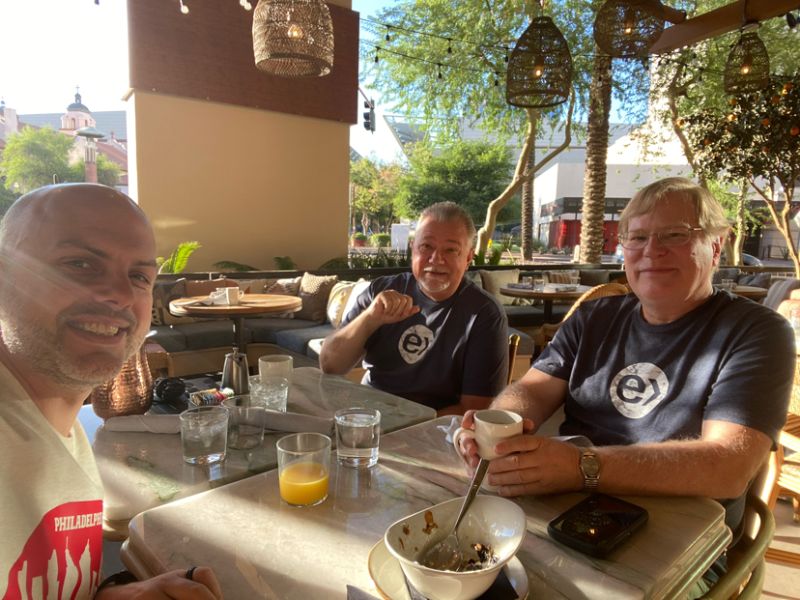 As we head into the next 25% of 2024, one of my goals is to simply pay it forward. As I continue to learn from the “Brian”s and “Rob”s and “Tom”s and “John”s of the industry it becomes essential to continue the evolution and pass those learnings off to others even if it’s a quick note about “what not to do” so others don’t follow my same mistakes! Just as important as the mentorship is, there needs to be a willing “mentee”. Someone who doesn’t hide from those teachable moments I referenced and who shares the same eagerness for self-improvement. Much like how we might’ve asked inquisitive questions as children, I’m sure I asked John and Tom my fair share of “Why’s?” along the way. It was their Understanding and Compassion that made it easy.


 I worked for a company that had a product catalog 3 times the size of those old Sears catalogs from the 1980s. Inside, it had every little connector, cable, and electronic device you could possibly think of. As a new employee on the job, I was given this catalog as a “bible” to the job and told to “learn it.” Nonetheless, I was inquisitive as a new hire and would regularly ask my manager questions about what part was appropriate for the job I was working on. Without fail, my boss would always start his reply with “Rob, I know we have reviewed this,” before eventually guiding me on the solution. I would sit at my desk left to think how there was no possible way he had reviewed every part on every page in that catalog. To compound this even more, I had more than a decade of experience under my belt, so I came into the role with a decent foundation to start with. My mind then became trained to not go to that boss for future questions, because I did not like being made to feel as though I was always wrong or forgetful. While that experience did not completely eliminate my ability to ask questions, it certainly set me back some because, much like my daughter, became intimidated at the thought of asking because I didn’t want to be made to feel as though I was lesser or not good enough.
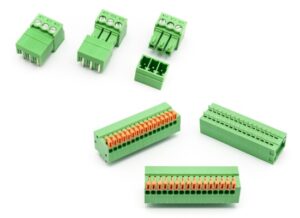 For me, I was always looking for the connectors on the cables to give me some sort of indication as to what signal they were sending, and to a certain degree they do. An XLR mic cable is GENERALLY used to for mic level audio, but not always. In many cases, there aren’t cable connectors at all, sometimes there’s just PHEONIX1 block connectors. Anyway, it became clearer to me when I learned that they’re all pretty much the same signal just at different voltage levels.
 So, really, an audio signal is just like a little