Smart Signage, Real Strategy: What AV Pros Should Be Pitching
Originally published in 2025. Updated August 2026.
Digital signage has evolved well beyond putting content on a screen. Today, customers aren’t looking for displays. They’re looking for smarter ways to communicate, engage audiences, and manage information across their organizations.
As AV professionals, our role has evolved too. We’re no longer just recommending hardware. We’re helping customers build communication ecosystems that are scalable, secure, and simple to manage.
That starts with asking better questions.
- How will the content be managed?
- Who needs access?
- How many locations will eventually be added?
- Can it integrate with existing AV and IT infrastructure?
- Is the solution flexible enough to support future technologies like AI driven automation and real time analytics?
Those conversations are becoming just as important as choosing the right display.
One platform that’s been gaining serious momentum is Autora DSM.
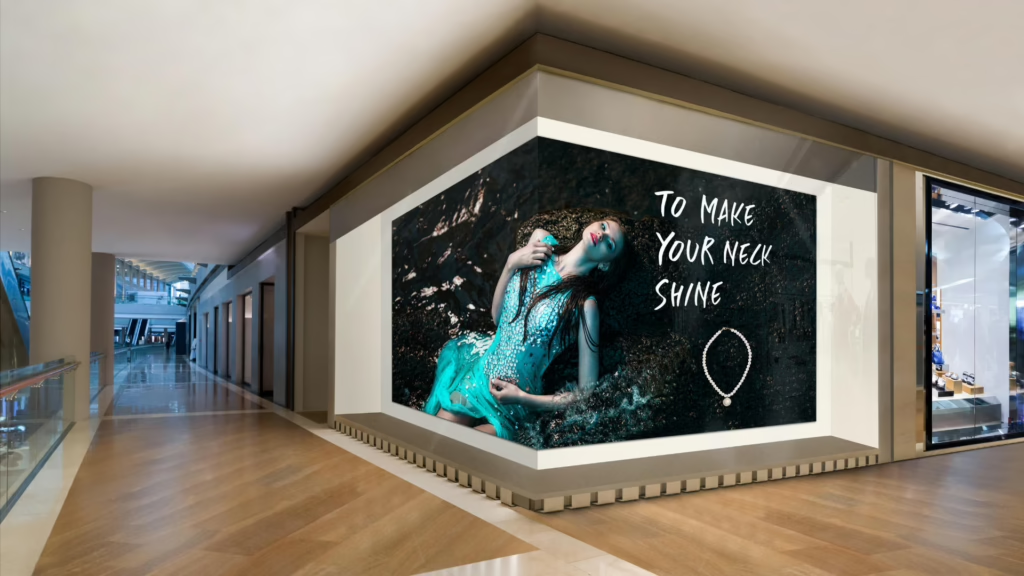
I’ll admit I’m a little biased because it’s part of the Almo Pro AV portfolio, but there’s a reason more organizations are taking a closer look. Autora DSM is cloud based, intuitive, and built to simplify digital signage management without creating extra work for IT departments.
Whether you’re managing a handful of displays or hundreds across multiple campuses or facilities, Autora makes scheduling, permissions, emergency messaging, and branded content management straightforward. The platform allows organizations to maintain consistency while giving the right people the flexibility to update content quickly and confidently.
One of the biggest trends I’m seeing today is the growing interest in artificial intelligence.
Customers aren’t just asking how to display content anymore. They’re asking how to make that content smarter.
AI is beginning to reshape digital signage by helping organizations automate content creation, personalize messaging, analyze audience engagement, and respond to changing conditions in real time. Imagine a retail environment where promotions automatically update based on inventory, a corporate lobby that changes messaging throughout the day, or a campus that instantly distributes emergency notifications across every display.
The possibilities are growing quickly.
That said, AI doesn’t replace good AV design.
It enhances it.
Without a reliable CMS, dependable hardware, strong network infrastructure, and thoughtful system design, AI becomes just another feature instead of a meaningful business solution. The foundation still matters.
 When it comes to dedicated media players, BrightSign continues to set the standard for reliability and performance. For projects where uptime, flexibility, and long term stability are priorities, BrightSign remains one of the strongest options available.
Carousel is another excellent solution, particularly for organizations that want multiple departments contributing content without sacrificing administrative control. Marketing, HR, communications, and individual locations can all manage their messaging while maintaining a consistent brand experience across the organization.
 For more advanced installations, tvONE continues to impress. Solutions like CORIOmaster make complex video walls, multiple content sources, custom layouts, and dynamic scheduling manageable without overwhelming the customer with unnecessary complexity.
Of course, every successful signage deployment depends on what’s happening behind the scenes.
Manufacturers like Atlona and WyreStorm continue to play an essential role by delivering reliable signal distribution, control, AV over IP, and system integration. As meeting spaces, collaboration technology, room scheduling, and digital signage continue to converge, dependable infrastructure becomes even more important.
What excites me most is where digital signage is headed.
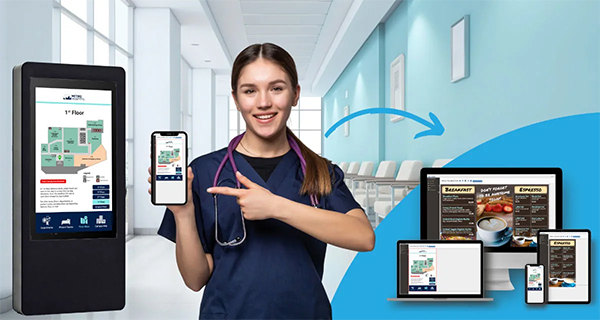 We’re seeing displays become intelligent communication hubs that support wayfinding, workplace collaboration, room scheduling, business dashboards, visitor engagement, emergency notifications, and interactive experiences. With cloud management, remote monitoring, automation, and AI continuing to evolve, digital signage is becoming a strategic business platform rather than just another AV system.
That’s why I encourage customers to think beyond today’s project.
The best solutions aren’t built around one manufacturer or one product. They’re built around understanding the customer’s goals and selecting technologies that can adapt as those goals evolve.
Whether that solution includes Autora DSM, BrightSign, Carousel, tvONE, Atlona, WyreStorm, or another platform entirely, the objective remains the same: create a digital signage ecosystem that’s reliable, scalable, easy to manage, and prepared for what’s next.
At the end of the day, customers aren’t buying screens.
They’re investing in smarter communication.
The AV professionals who lead with strategy, embrace emerging technologies like AI, and focus on solving business challenges instead of simply quoting products will continue to earn trust, strengthen relationships, and create long term value for their customers.
That’s the conversation worth having.

 Stadiums in October aren’t just about football; they’re about atmosphere. Absen PL2.5 Pro, Samsung IAC, LG’s LAPA136-GF.AUSQ, Planar TVF, and MAXHUB LM138A07 LED walls make even the nosebleeds feel like front row. Epson EB-PU2220B projectors put replays on the big board brighter than the Florida sun. Christie Griffyn 4K32-RGB lights up end zones like Broadway, and Panasonic PT-MZ880 keeps multipurpose areas covered. Peerless-AV and Chief mounts hold it all steady, while Sennheiser EW-DX mics, JBL VTX arrays, and Crown I-Tech amps make every whistle and roar shake the concrete. And if you don’t have control? Forget it. AMX and Atlona keep the show running smooth so no one fumbles the AV on 4th down.

 In Colombia, soccer stadiums are upgrading too. Imagine stepping into a venue with Absen LED walls lighting up the pitch, Barco G62 projectors handling pre-match visuals, and PTZOptics 30X-NDI cameras with Hive pushing live feeds straight to mobile apps and fan zones. Fans tune into ListenWiFi for play-by-play without missing a call, and the energy feels like Maracanã on a final. That’s the kind of AV that keeps fans in the moment instead of looking for the nearest exit.
 September is the last stretch of Q2 for us, and if I’ve learned anything in this industry, it’s that this month decides who walks into Q3 relaxed and who walks in scrambling. If you wait until November, you’ll be the one calling your customer to explain why their install is stuck on a boat. I have made those calls before and they are not fun.
 And I see it happening across the region right now. In Costa Rica, companies are already building hybrid rooms with
  Puerto Rico is another great example. A university there recently upgraded lecture halls with
  We gave them a
  We gave them an
  Down in Guatemala City, a university needed hybrid learning across multiple classrooms. What they had was a mess. Different brands in every room, spotty audio, and teachers wasting half their class time setting up.
 Example: During a recent deployment for a Fortune 500 client in Mexico City, we connected 20 meeting rooms with seamless 4K video distribution using
 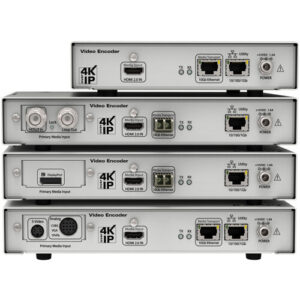 That means faster rollouts, fewer compatibility issues, and streamlined support.
 Universities are quickly adopting AVoIP for lecture streaming, content distribution, and hybrid learning. The flexibility and remote management capabilities make it a game-changer for higher ed.
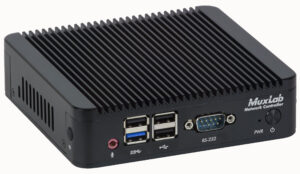 LATAM Example: A corporate campus in São Paulo rolled out
  Financial Sector Example: When upgrading the Panama offices of a financial institution, we deployed
  AVoIP also offers enhanced security. Solutions from
 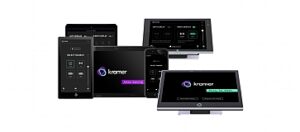 Hospitality Example: One of our Caribbean resort clients now manages their entire digital signage network remotely using