AKG Wireless Microphones – An Overview

AKG Wireless Microphones

Selecting a wireless microphone system can be an intimidating experience. The amount of choices, configurations, and specifications available can be dizzying, even for those of us with experience in the industry.

Thankfully, AKG makes a wide range of high-quality wireless microphone systems to fit any application and budget, and once you know the major differences between them, you’ll be able to select the right product for your project in no time.

AKG wireless microphone systemWhat’s the Use (Case)?

Perhaps the most important consideration in selecting a wireless microphone system is where and how it will be used. Is it for a professional stage or broadcast environment where sound quality and reliability are paramount? Or is it for the lead singer for a local cover band where the highest quality for a limited budget is the key factor? Is it for a corporate or government environment where the signals may need to be encrypted to remain confidential? Identifying the needs of your end-user is the first step to determining which system is right for you.

Changing Channels

Another primary consideration is the number of simultaneous channels you will need at a particular location, as well as the amount of other wireless signals in the area. Professional touring environments may require as many as 40-50 open wireless channels (think stadiums, Broadway shows, large houses of worship), whereas a simple fitness studio may only require one or two. The ability to have a large number of simultaneous wireless channels running at the same time is a key differentiator in cost when it comes to wireless systems.

If you are installing the system in an area where there might be a considerable amount of wireless interference, such as a campus or dense urban environment, having a wide frequency range and the ability to easily identify clear frequency bands should be a prime consideration.

Digital vs. Analog

Newer digital wireless systems offer better audio quality and the ability to encrypt the signal for better security, but operate in the 2.4 GHz band, which is also where omnipresent WiFi and Bluetooth signals reside, so in dense commercial environments they may not be the best choice. Although analog RF-based systems operate on older technology, they are still the preferred choice for professional broadcast and live event systems.

So which AKG wireless system is right for you? Let’s take a look at their entire range and their pros and cons:

AKG WMS 40 MINI

AKG’s WMS 40 MINI series offers incredible value for the money. These are simple-to-operate, single-channel fixed-frequency systems which offer plug-and-play setup and a small form factor.

AKG PERCEPTION WIRELESS

The Perception Wireless series is an excellent choice for simple small-scale systems with a tight budget. It is an analog UHF-based system with basic frequency selection ability.

AKG WMS420

The most cost-effective professional system in the AKG range, the WMS420 offers a wide frequency selection band, detachable antennas to allow remote mounting, and rechargeable transmitters.

AKG WMS470

The WMS470 series is the best choice for a cost-efficient, high-performance, multi-channel system. Rechargeable batteries can be used and charged while remaining in the transmitter using the optional CU400 stand charger. The rear-mounted antennas can be detached for remote mounting.

AKG DMS100 & DMS300

The DMS100 and DMS300 systems are professional digital wireless systems from AKG, which offer pristine 24-bit/48 kHz audio and AES 256-bit encryption operating on the digital 2.4 GHz platform and are an excellent entry point to the world of digital wireless. The primary difference between the DMS100 and DMS300 is the simultaneous channel count – DMS100 allows up to (4), and the DMS300 allows up to (8).


AKG DMS800

The DMS800 is a reference professional-level digital wireless system designed for theaters, live productions, and tour sound applications. It offers the most accurate and reliable signal transmission in their digital line, and can be remotely monitored by Harman software.

AKG WMS4500

AKG’s flagship analog wireless system, the WMS4500, offers the highest channel quantity – up to (70) simultaneous channels, maximum reliability, and ultimate audio quality. Designed for touring sound, live performances, and broadcast applications, it is the system by which other AKG wireless systems are measured.

Conclusion

AKG offers a fit for every price point and project need. All of the above systems are available in a number of different configurations, with different transmitter options such as handheld, instrument, lavalier, and head-worn versions.

And don’t worry, if you still need assistance in selecting the appropriate AKG wireless system for your project, the Audio Team at Almo ProAV is here to help any time, at [email protected].

Audio enthusiast? Check out “Visiting the JBL Experience Center“.
John Rossman - headshot-frame

About the Author

John Rossman | CTS

BDM II – Technical Specialist

Supported Manufacturers: Harman ProfessionalAKG, AMX, BSS, Crown, DBX, JBL, Lexicon, Martin, & Soundcraft

Modern AV – Throwaway Living

In August of 1955, LIFE magazine ran an article in their Modern Living section called, “Throwaway Living: Disposable Items Cut Down Household Chores”.

The picture associated with the piece shows dozens and dozens of household items and claimed that the objects shown represented 40 hours to clean.  Another picture in the article shows a single-use barbeque grill with stand, asbestos shell, wire grille and enough charcoal to last one hour.  Maybe not everything convenient is a good idea.

Eventually it was discovered that throwing everything away and filling up landfills was not a good long-term strategy – imagine that.

The first Ecology symbol that I recall came about in 1969, and in 1970 we had our first Earth Day.  I’m also old enough to remember the early days of Mother Earth News and the Whole Earth Catalog.

Today we talk about fighting pollution and environmental destruction with recycling, reuse and reclamation.

A few weeks back, I was doing some web searching into audio consoles and I found a comment about how that one brand was so cheap that they budgeted for two, one to use and a second as a backup for when the first one failed.  This was because of the brand’s notoriety for lack of quality, support and service.

Recently I had a request for eight wireless microphone channels.  A popular online shopping site shows an eight-channel system at $34.99 per channel.  That’s not a typo.  $34.99 per channel.  By comparison, Ronco’s Mr. Microphone was $12.88 back in 1978.  $12.88 in 2025 dollars is $63.82.  Today, Mr. Microphone would be almost twice as expensive per channel than the new online offering.  At these price points, equipment has no real value and not even worth the attempt to repair if, actually when, it fails.  We just throw it away and get another one.

Like Marty McFly, we’re all back to living like we’re in 1955 except in our Throwaway Society, we’re tossing electronics, appliances, tools and even cars away like they’re paper plates and plastic utensils.

Think about it – what can we buy today that will provide a lasting value for years to come?  We used to call them Durable Goods and it’s a real economic category.  The Durable Goods subcategory of Electronics includes TVs and computer equipment.  The items in that category should probably be updated, as seeing a modern TV or a computer as a “durable good” is hard to fathom.

A true durable good was the old refrigerator that you had in your house in the ’60s and early ‘70s that came in Harvest Gold, Avocado or Burnt Orange that would live forever.  You may still have one as your garage fridge.

In our world of AV, what product or signal transport can you spec in a project today that will still be relevant five years from now?  Is any piece of modern AV equipment a durable good?  Perhaps a good hardwired microphone or a quality loudspeaker, but that’s it.

sustainable AVWe’re often working with refresh cycles of five years, and I’ve seen articles where the IT refresh cycle is two to four years.  People on average keep a phone 2 ½ to 3 ½ years and a car for eight.

Imagine if all of the things around your house had to be replaced every five years: lawn mowers, refrigerators, washing machines, lamps, bicycles, roofs, windows, electrical panels and wiring, plumbing, etc.  It seems crazy, but we’re replacing AV equipment and the connecting infrastructure regularly to stay current with the technology.

Current with what?  It’s not just the ever-increasing resolutions and the bandwidth required to support the higher resolutions.  I would argue that it is in large part due to the plethora of proprietary signal interfaces and protocols that we have.

HDMI with HDCP was forced upon us from the Consumer world and HDBaseT made it possible for us to extend HDMI in our Pro world.  Unfortunately, one manufacturer’s HDBaseT may not work with another manufacturer’s HDBaseT and it has always been that way.

So maybe we use a different signal type.  Maybe we use SMPTE ST 2110 or one of the SDIs.  Maybe we “simplify” and go AVoIP.  With AVoIP we can choose from Dante, SDVoE, NDI, IPMX, SRT or one of the manufacturer’s proprietary AVoIP transport protocols.

Or worse, let’s see if we can just use HDMI or DisplayPort on the USB-C connection.

Do you see part of the problem yet?  Although AVB/TSN (Audio Video Bridging/Time Sensitive Networking) promised to bring us signal transport’s version of World Peace, that was over 20 years ago.  AVB/TSN had its challenges, so everyone continued to do their own thing.  From an Alliance or manufacturer’s viewpoint, I get it – who doesn’t want to try and rule the transport world?  But in the long-term, is this wise from a client and sustainability perspective?  Moreover, how long do we think we can maintain all these separate protocols?  We are working with built-in incompatibility and obsolescence.  What if our IT compatriots say, “Enough of all this incompatible nonsense and proprietary transports” and decide for us what we’ll be using.  It’s all on the network, right?

Broadcast and Production have been using NDI, ST 2110 and IPMX in their IP-based workflows and we’re already using conferencing cameras equipped with these protocols as we seek to emulate more of a production experience.  As more of our regular conferencing and streaming looks more like a production, perhaps one of these will become our default but that still doesn’t solve the video protocol coming out of a computer.

In a perfect world, I’d like to see a single interoperable Ethernet AVoIP protocol built into every computer, AV signal source and AV signal destination.  No more separate transmitters, receivers, encoders or decoders.  Configuration so simple that even a cave man can do it.

“So if AV is nothing but an endpoint, where does that leave us in the Pro AV world, Tom?”  It leaves us where we should be: Experts on the communication environment.  Realistically, this is where our true value resides – the crafting of the environment wherein humans can communicate effortlessly.

We spend so much time on signal extension and transport that we don’t have the time to work properly with the client on optimum image sizes, sightlines, content, lighting, interior design, furniture layouts, acoustics, microphone locations, loudspeaker coverages and intelligibility – all the necessary factors that contribute to a better overall communication implementation.

As I see it, the bottom line is that at some point, AV manufacturers will all need to learn to get along with one another for true interoperability – for our sakes as well as the end users and for the planet.

There is the SAVe organization that seeks to bring AV stakeholders together to take action to achieve the 2030 Sustainable Development Goals (SDGs).  A big part of SAVe’s focus is to provide ways that companies can be more responsible in terms of reusing, repurposing, recycling and disposing of AV equipment.  Get to know them at https://saveav.org/

In the meantime, reach out to us here at Almo Pro AV.  We’ll do our best to help you craft solutions that will work best for your clients not only now, but as best we can, in the future.

Tom Kehr
About the Author

Tom Kehr

CTS-D, CTS-I, Network+, LEED Green Associate, ISF-C, ATD Master Trainer

In-House System Designer and Trainer

Supported Applications: System Design

Almo ProAV’s in-house system design experts have you covered with tools to deliver impeccable visual and sound experiences. Whether you’re working with a screen, flat panel, or LED wall, or even designing a sound system, the tools below will help you answer questions such as:

  • How big does an image need to be?
  • Where should the viewers be located in relation to that image?
  • Will my sound reinforcement system be free from feedback?

Check out the Almo Pro AV Calculator Tools developed by Tom including:

  • Basic Decision Making (BDM)
  • Analytical Decision Making (ADM)
  • Potential Accoustic Gain (PAG) – Needed Accoustic Gain (NAG)
  • General Calculator & Converter
  • Ceiling Loudspeaker Design

How Lunar New Year Can Impact Product Timelines in Hospitality Spaces

How Lunar New Year Can Impact Product Timelines in Hospitality Spaces

In the hospitality industry, timing is everything. Whether you’re refreshing guest rooms, outfitting common areas, or enhancing outdoor spaces, project deadlines often align with seasonal demand and guest expectations. Meeting those deadlines requires careful planning, strong vendor relationships, and an understanding of potential challenges that may impact supply chains along the way.

One often-overlooked factor is the Lunar New Year holiday, which has a significant impact on global supply chains. You’ve likely experienced a slowdown in those supply chains while supporting projects in hotel spaces. While many are familiar with Lunar New Year as a cultural celebration marked by family gatherings, festivals, and traditions, its effect on business operations is sometimes underestimated, especially in industries like hospitality, where projects depend on tight schedules.

What is Lunar New Year?

As the most widely celebrated holiday in China, the Lunar New Year marks the start of the lunar calendar. While festivities traditionally last 15 days, factory closures and slowdowns can stretch over several weeks as workers travel to be with family. In 2026, the official holiday in mainland China will run from February 15–22, followed by the Lantern Festival on March 3.

What This Means for You

Shipping FacilityIf your projects rely on products manufactured in Asia, or components sourced from the region, these closures can mean longer lead times, shipping backlogs, and even rushed orders with compromised quality. The impact doesn’t stop there. Logistics, customs, and freight forwarding also experience congestion after the holiday, which can create ripple effects that push deliveries even further.

If your product manufacturer is in Asia or sources components from there, you can expect longer turnaround times. Additionally, there is the potential for rushed orders with compromised quality, expedited shipping fees and storage costs, and staffing gaps following the break.

  • Production Delays: Factories may close for 2-4 weeks, halting or delaying manufacturing.
  • Shipping Backlogs: Orders submitted too close to LNY often get pushed behind once production restarts.
  • Extended Lead Times: Even after reopening, it can take weeks for operations to return to normal.
  • Ripple Effects: Logistics, customs, and freight forwarding also experience congestion, further slowing delivery.

For hotels and resorts working toward openings, renovations, or seasonal updates, a delayed furniture shipment or lighting fixture could push back completion, preventing the space from being guest-ready at peak season. Outdoor product delays can impact poolside furniture or patio areas just as warmer weather approaches. These disruptions don’t just affect aesthetics, they can influence guest experience, revenue opportunities, and brand perception, putting critical timelines at risk, which makes proactive planning essential.

Customer SupportHow Almo is Here To Help

Here’s the good news: by partnering with Almo, we’ll help ensure that your projects stay on schedule, especially when global supply timelines are compromised. Our strong vendor relationships, advanced planning tools, and product availability strategies help minimize the risks associated with supply chain slowdowns during Lunar New Year.

  • Spot potential delays ahead of time: We’ll review your upcoming projects to identify which SKUs or product lines are most likely to hit a delay window.
  • Stay in the loop: We’re already talking to the manufacturers. We’ll keep you informed as shipping updates, cutoff dates, or allocation news comes in.
  • Look for alternatives: If something has a long lead time, we can help you find comparable options.
  • Secure key products: If something is critical to your project, we’ll help you secure stock of pre-plan allocations.
  • Leverage our distribution support: We’re here to help you secure inventory and manage logistics.

It’s easy to push these conversations off until you’re placing orders, but by then, timelines are already tight. If you have hospitality projects coming up in early 2026, we’ll help you build a plan that avoids delays and keeps your projects moving.

Planning Ahead Makes All the Difference

Waiting until the last minute to consider the Lunar New Year’s impact can put hospitality projects at risk. If you have renovations, openings, or seasonal updates planned for early 2026, starting your planning now is essential. By identifying potential delays, securing key products, and exploring alternative solutions, you can maintain your timeline and ensure guest-ready spaces.

With Almo’s support, hospitality teams can anticipate supply chain challenges, minimize disruptions, and keep projects on schedule, all while maintaining high standards of quality and service.

Connect with us today to start planning your project timeline and avoid Lunar New Year delays.

Plug-and-Play AV: The Fast Track to Smarter Collaboration Upgrades Before Year-End

The clock is ticking on year-end budgets, and for many corporate clients, that means finding smart ways to maximize remaining funds without adding complexity. Enter plug-and-play AV solutions: the ultimate shortcut to collaboration upgrades.

What Does Plug-and-Play AV Really Mean?

In simple terms, plug-and-play AV is all about simplicity, speed, and scalability. These solutions are designed to work right out of the box – no lengthy configuration, no specialized programming. For integrators, that translates into faster deployments and fewer headaches. For clients, it means immediate ROI and minimal disruption to daily operations.

Why It Matters for Corporate Spaces

Hybrid work isn’t going anywhere. Teams need tools that make collaboration seamless whether participants are in the room or remote. Plug-and-play AV solutions deliver exactly that:

  • Ease of use: No IT degree required – employees can walk in and start collaborating.
  • Flexibility: Works across multiple platforms and spaces, from huddle rooms to boardrooms.
  • Scalability: Start small and expand as needs grow.

Popular Solutions to Consider

MaxHub collaborationHere are a few examples of plug-and-play options that integrators are leveraging to help clients upgrade quickly:

  • Wireless Presentation Systems: Tools like Barco ClickShare Hub Core make sharing content effortless – no cables, no confusion.
  • USB Conferencing Kits: Solutions such as the Maxhub XCore Kit for Teams or Huddly L1 Kit deliver high-quality video and audio without complex installs.
  • Smart Cameras and Video Bars: Products like Jabra PanaCast 40 VBS enhance hybrid meetings with intelligent framing and crystal-clear sound.
  • Network Optimization: Don’t forget the backbone – switches like Netgear M4250 ensure AV-over-IP runs smoothly.

Why Act Before Year-End?

There’s a strategic advantage to moving now:

  • Budget Efficiency: Many organizations have funds earmarked for technology upgrades and must use them before they disappear.
  • Immediate Productivity Gains: Faster deployments mean teams start benefiting right away.
  • Future-Proofing: These solutions position clients for success in 2026 and beyond.

Bottom line: Plug-and-play AV isn’t just a trend – it’s a practical way to deliver value quickly. As an integrator, helping clients make these smart upgrades now can strengthen relationships and set the stage for continued growth.

Want help finding the right solutions for your projects?
Reach out to your Almo sales representative or business development manager. We’re here to make the process simple and stress-free. Start the conversation with our team ⟫

Beyond the Boardroom: dvLED Projects That Define Corporate Identity

Thanks to direct view LED technology (dvLED), corporate environments are evolving from functional spaces into immersive brand experiences. From lobbies to executive boardrooms, custom dvLED installations are helping companies communicate their identity with clarity, creativity, and impact.

Of course, bringing these projects to life requires more than just great design – it takes a solid understanding of the technical building blocks behind dvLED. That’s where Almo’s dvLED Category Manager, Tom Keefe, comes in. In his Breaking Down dvLED blog series, Tom shares practical insights that help AV professionals plan smarter, install with confidence, and avoid common pitfalls.

Here’s a quick overview of the topics he covers – each one offering valuable guidance for your next corporate dvLED project.

Get Help When You Need It

Even experienced AV teams benefit from commissioning assistance. Having expert support during installation helps avoid costly mistakes and ensures the system is optimized for long-term performance.

Read more → The First Step in Installing a dvLED Video Wall Is Admitting You Need Help

Start with the Space

Every great dvLED installation begins with proper site prep. From structural integrity to power and ventilation, laying the groundwork ensures the system performs as intended and integrates seamlessly into the environment.

Read more → First Things First: The Importance of Proper Site Prep

Understand the Anatomy

Direct view LED video walls are built from cabinets, modules, and panels – each playing a critical role in the system’s performance and appearance. Knowing how these components work together helps you design smarter and install more efficiently.

Read more → Cabinets & Modules & Panels, Oh My!!!

Choose the Right Pixel Pitch

In corporate settings, clarity and detail matter. Whether you’re displaying branded visuals or data dashboards, selecting the right pixel pitch ensures your content looks sharp and professional from every angle.

Read more → Perfect Pitch: The Importance of Selecting the Right Pixel Pitch the First Time

Plan for the Unexpected

Corporate environments demand reliability. Having spare parts on hand, especially for custom configurations, can make all the difference when maintenance is needed or downtime must be avoided.

Read more → Got Spares? The Importance of Having Spares When Purchasing / Commissioning a dvLED Video Wall

Bringing It All Together

Direct view LED technology offers endless possibilities for expressing corporate identity – from bold lobby displays to high-performance executive spaces. By understanding the essentials and planning with purpose, AV professionals can deliver installations that go beyond the boardroom and leave a lasting impression.

Explore Almo’s dvLED solutions or contact a BDM to start your next project.

Want more business development advice? Check out this blog by Tom, “The AV MBA: You Can’t Always Get What You Want“.

Tom Keefe BDM

About the Author

Tom Keefe | CTS, DMC-D-4K, DSCE

Category Manager – dvLED

Supported Category: Direct View LED

Spaces and Sound System Considerations: Looks About Right

Back around 1989, Curt Taipale coined the phrase, “Looks About Right” or LAR for short. It referred to any “design” that was the result of guesswork rather than using any of the readily available tools that can be used to actually predict an end result.

For whatever reason, a number of projects have crossed my desk recently that look way too much like LAR.

JBL DSD SoftwareThe most common use of this poor “design” philosophy seems to be in determining the appropriate number of ceiling loudspeakers for a room. It seems everyone other than an actual AV Designer guesses at the number of loudspeakers needed using the LAR method. Take for example the 40 ft. x 27 ft. room with a 9 ft. ceiling where the initial inquiry stated, “I would think a ceiling speaker on each side of the room would be sufficient.” JBL’s free DSD (Distributed System Design) software has been around for decades and it’s a simple method for determining the number of ceiling or pendant loudspeakers required. No guesswork. Done. Quote ‘em. Put ‘em in. Manufacturers other than JBL have similar programs. Some even have nice graphics. All free, so there’s no reason not to use one.

However, once you go beyond ceiling or pendant loudspeakers, you may not be able to use a simple piece of design software; you’re into a completely different thought process using room modeling software to predict audience coverage.

In one recent example, I was shown a very reverberant house of worship space with high quality (insert reputable name brand here) loudspeakers everywhere. This included some in the back facing towards the front! It looked like the Water Sprinkler Theory of Sound where you just spray energy everywhere for “coverage”. As I remarked to the integrator tasked with fixing this, “I have never seen such quality gear implemented so poorly.”

In another recent example, the request was for a couple of two-way surface mounted loudspeakers with 5 1/4 inch woofers to cover an auditorium of 200 people. To quote Derek Bieri, “We’ll pretend we didn’t see that.”

When designing a sound system, consider these four parts:

  • The acoustical properties of the room
  • The background noise level of the room
  • Loudspeaker choice and location
  • Needed bandwidth

Large room with varied acousticsAcoustical Properties:

This involves the room shape, size and the materials found within the room as well as the areas adjacent to the room. Concave walls, domed ceilings, excessive volume (as in cubic feet or cubic meters) and large flat, smooth surfaces are challenging and at worst, could make the space unsuitable for the intended purpose. The only way to change the acoustical properties is to change the room physically or by the use of strategically chosen and placed acoustical materials. Unfortunately, people seem to always believe that new gear can fix a bad room. Look at fixing the room first if you think you have a room issue.

Background Noise:

Another key component to consider for a successful sound system is the acoustic signal-to-noise ratio. You can’t just crank the sound system to 11 because the room is noisy and expect the listeners to be comfortable. A common offender is the noise emanating from the HVAC system. However, ASHRAE (American Society of Heating, Refrigeration and Air-Conditioning Engineers) publishes their Handbook with a handy Design Guideline Chart in the Noise and Vibration Control chapter. It shows NC (Noise Criteria) and RC (Room Criteria) ratings for different room types. You might be surprised that they list a target of NC/RC 35 for Conference Rooms and NC/RC 30 for Teleconference Rooms and Classrooms. Churches are listed as NC/RC 25. Our lives would be so much easier if we found these levels out in the wild.

Loudspeakers:

The more challenging the acoustics, the more critical loudspeaker choice and placement become. You need to direct the energy from the loudspeakers to where the people are and off of all the other surfaces in the room and this requires pattern control. You need the correct loudspeakers located in the correct position and as every room is different, loudspeakers are not one-size-fits-all.

So how do we keep all that sound pointing only in the direction we want it to? Directivity comes in two forms:

  1. Interaction with a boundary like a wall (which creates its own problems) or a loudspeaker mounted within a horn or,
  2. Interaction with another loudspeaker like you would find in a line array.

Regardless of whether it’s a point source loudspeaker or line array, size matters when it comes to pattern control.

The issue is that over the ten octave frequency range from 20 Hz to 20,000 Hz, we’re dealing with wavelengths from over 56 ft. long to less than 3/4 in. long. In other words, if we want to control the spread of energy down to the lower frequencies, we are going to need some really large devices. How practical are the loudspeakers that will provide adequate “throw” and pattern control over that range? This can be difficult if someone decides loudspeakers should be heard but not seen.

Bandwidth:

The analog telephone system that some of us grew up with had a frequency response of about 300 Hz to 3,400 Hz and it worked quite well for intelligibility. Our clients probably have a bit higher expectation from a modern sound system.

On the other hand, do we need a full 20 Hz to 20,000 Hz bandwidth?

What’s important as far as frequency range? We find that the octave bands of 1 kHz, 2 kHz and 4 kHz account for about 75% of speech intelligibility with the 500 Hz octave band contributing about another 13% and the 8 kHz octave band only about another 6%.

Intelligibility is a different criteria from quality speech reproduction as the average speech spectrum covers from the 125 Hz octave band to the 8 kHz octave band and even beyond with the additional harmonics affecting speech quality.

Full-range loudspeakers designed for sound reinforcement can certainly extend below 100 Hz, but how much of that range do you need? It depends… Usually, we’re designing a dual purpose system – one that’s used for speech and music. The need for low frequency extension usually depends on the genre of music being played or reproduced.

On the other end of the spectrum, we may have to contend with air absorption in very large rooms. Air absorption can act as a natural low pass filter with the cutoff frequency decreasing as a function of increasing distance.

Graph of hz audio frequencies

Unless we’re in a recording studio or a post-production facility sitting in the sweet spot with high-end monitors just feet from our ears, getting 20 Hz to 20 kHz just isn’t practical or even necessary. It’s also good to remind yourself that the SM58 has a stated frequency response of 50 Hz to 15,000 kHz as a reality check.

There have been some articles written recently about how others’ perception of you – rightly or wrongly – may be based upon the quality of your audio, and that high quality audio can make you sound more attractive and convincing to others.

It’s all a balance between desire and practicality.

Summary:

There will be tradeoffs between desire, practicality and budget. There isn’t any loudspeaker, venue or system implementation that’s 100% perfect, but there certainly seems to be a lot of “very wrong” out there.

If you would like help avoiding the LAR approach and “very wrong”, let us know at Almo Pro AV. We can assist the system integrator with product recommendations, resources as well as paid engineering services and more through our LinkLab professional services division.

Tom Kehr
About the Author

Tom Kehr

CTS-D, CTS-I, Network+, LEED Green Associate, ISF-C, ATD Master Trainer

In-House System Designer and Trainer

Supported Applications: System Design
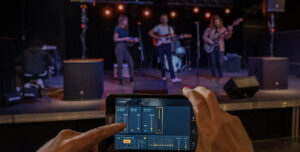
Almo ProAV’s in-house system design experts have you covered with tools to deliver impeccable visual and sound experiences. Whether you’re working with a screen, flat panel, or LED wall, or even designing a sound system, the tools below will help you answer questions such as:

  • How big does an image need to be?
  • Where should the viewers be located in relation to that image?
  • Will my sound reinforcement system be free from feedback?

Check out the Almo Pro AV Calculator Tools developed by Tom including:

  • Basic Decision Making (BDM)
  • Analytical Decision Making (ADM)
  • Potential Accoustic Gain (PAG) – Needed Accoustic Gain (NAG)
  • General Calculator & Converter
  • Ceiling Loudspeaker Design

Pin It on Pinterest